


What Oboe and English Horn Share in Common? A Full Exploration
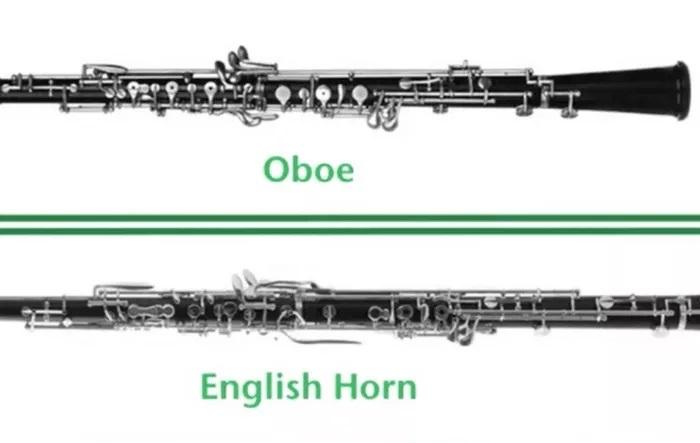
The oboe and the cor anglais—also known as the English horn—are two captivating double reed instruments that share a close kinship. They are staples of the woodwind family and often work side by side in orchestral and chamber music settings. While each has its unique identity, the similarities between them are numerous and profound. This article explores what these two instruments have in common, from their structural design and sound production to their roles in music ensembles, making it easier for aspiring musicians, music enthusiasts, and educators to understand their relationship.
Shared Origins and Historical Development
The oboe and cor anglais share a common ancestry. Both evolved from early double reed instruments used in Europe during the Renaissance and Baroque periods. The oboe was developed in 17th-century France, derived from the shawm—a medieval woodwind instrument. The cor anglais followed in the 18th century, essentially as a deeper-pitched counterpart to the oboe.
Both instruments were refined during the Classical and Romantic periods to suit the evolving needs of composers. As orchestras expanded and composers demanded more expressive range, the cor anglais was introduced to add depth and color to the woodwind section. Today, both instruments retain a similar aesthetic and functional identity, maintaining the essence of their historical lineage.
Family Ties in the Woodwind Section
The oboe and cor anglais belong to the same sub-family of woodwinds—the double reed family. This group also includes the bassoon and contrabassoon. Within this family, the oboe and cor anglais form a close-knit pair.
The oboe is considered the soprano voice, while the cor anglais fills the alto or tenor role. This relationship mirrors the structure found in vocal choirs and string sections. When composers need to extend the oboe’s expressive range downward, they often employ the cor anglais, making both instruments integral parts of the same musical family.
Double Reed Mechanism
At the heart of both instruments is the double reed—a delicate, hand-crafted piece made from two pieces of cane bound together. This shared feature is one of the most distinctive traits they have in common. The double reed acts as the sound generator and gives both instruments their characteristic tone—rich, penetrating, and deeply expressive.
Both the oboe and cor anglais rely on the player’s breath control and embouchure to manipulate the reed, allowing for a wide range of dynamics and tonal color. Reed-making is a critical skill for players of both instruments, often requiring hours of crafting and adjustment. Despite differences in size, reeds for both instruments are shaped using similar techniques and materials.
Bore Structure and Acoustic Principles
The bore of an instrument significantly impacts its timbre and tuning. Both the oboe and cor anglais share a conical bore—a tube that gradually widens from the reed to the bell. This conical design produces a more vibrant and complex tone compared to cylindrical bore instruments like the clarinet.
This design is also responsible for the instruments’ ability to overblow at the octave, a trait that simplifies fingering across registers and allows for smoother transitions. The acoustical behavior of both the oboe and cor anglais is thus based on identical principles, making the playing experience between the two familiar for trained musicians.
Fingerings and Playing Techniques
Another important similarity lies in the fingering system. Both the oboe and cor anglais use an almost identical fingering chart, especially in the lower two octaves. While the cor anglais has a larger body and key spacing, the techniques used to navigate the instrument are nearly interchangeable with the oboe.
This consistency allows oboists to transition to the cor anglais with relative ease and vice versa. The skill set developed on one instrument directly translates to the other, which is why many professional oboists also double on the cor anglais in orchestral settings.
Similar Embouchure and Breath Support
Embouchure—the way a player shapes their lips and facial muscles around the reed—is crucial for producing sound on both the oboe and cor anglais. Because they both use double reeds of similar construction, the embouchure techniques required are almost the same.
Likewise, both instruments demand advanced breath support. The resistance of the double reed requires controlled air pressure and excellent diaphragm control. Musicians must develop stamina and precision to perform long, lyrical passages and sudden dynamic changes effectively.
Tonal Qualities and Emotional Expressiveness
One of the most celebrated aspects of both the oboe and cor anglais is their expressive tone. They are capable of producing highly emotive sounds, often used by composers to evoke specific moods. The oboe’s tone is described as bright, poignant, and slightly nasal, while the cor anglais offers a darker, more melancholic timbre.
Despite these differences in tone, both instruments are celebrated for their singing quality and their ability to mimic the human voice. They are often used for solos that require deep emotion, such as the English horn solo in Dvořák’s “New World Symphony” or the oboe solo in Tchaikovsky’s “Swan Lake.”
Roles in Orchestras and Ensembles
In orchestral music, the oboe and cor anglais often perform complementary roles. The oboe is a staple in the woodwind section, usually playing melodic lines, harmonic support, or doubling other instruments. The cor anglais, though used less frequently, is often featured in emotionally charged solos or as a harmonic bridge.
In chamber music, both instruments are paired with strings, piano, or other winds. Their distinct yet compatible timbres make them ideal for blending and contrasting with other instruments. Composers frequently write for both in wind quintets, octets, and mixed ensembles.
Compositional Repertoire
While the oboe enjoys a more extensive solo repertoire, the cor anglais also has a respectable collection of works. Many orchestral scores include prominent parts for both instruments. Composers like Mahler, Berlioz, Ravel, and Shostakovich have written expressive passages for each.
Because of their similar playing techniques, pieces written for one can often be adapted or transcribed for the other. This expands the performance opportunities for musicians and allows for more versatile programming in concerts and recitals.
Materials and Construction
Both instruments are typically made from dense hardwoods such as grenadilla or rosewood, which help produce their rich, resonant tone. The keys are made of silver or nickel and feature intricate mechanisms for precision control.
The cor anglais is essentially an enlarged oboe with a bulbous bell and a curved metal bocal. Aside from these structural modifications for range and tone, the construction techniques for both instruments are quite similar. This shared craftsmanship adds to their acoustic compatibility.
Orchestration and Doubling Practices
It is common practice for oboists to double on the cor anglais in professional ensembles. This means a single musician may be required to switch between instruments depending on the needs of the composition. This dual role underscores the compatibility and interconnectedness of the two instruments.
Composers often take advantage of this by assigning dramatic solos to the cor anglais while keeping the oboe active in ensemble passages. The ability to switch between instruments makes musicians more versatile and valuable in the orchestral setting.
Presence in World Music and Cultural Influence
While both instruments are rooted in Western classical traditions, they have found their way into global music scenes. The oboe and cor anglais appear in film scores, contemporary music, and even jazz. Their evocative sound appeals to composers across cultures.
Both instruments have been embraced for their emotional range and tonal distinctiveness, showing up in world fusion music, experimental compositions, and even pop tracks. Their flexibility across genres showcases how closely their functions align.
Conclusion
The oboe and cor anglais are like siblings in the world of music. Their shared characteristics—from double reeds and conical bores to fingering and embouchure—make them deeply intertwined. Musicians and listeners alike appreciate the emotional depth and tonal beauty these instruments offer.
Though each has a distinct voice, together they form a harmonious duo that enriches orchestras, chamber music, and solo performances alike. Their similarities in construction, technique, and expression reveal a profound musical relationship—one that continues to inspire composers, players, and audiences around the world.

 English
 Arabic
 French
 Spanish
 Portuguese
 Deutsch
 Turkish
 Dutch
Dutch
 Italiano
 Romaian
 Portuguese (Brazil)
 Greek
Greek