


Are The Top AI Tools 2025 Truly Reshaping The Way We Work?

Artificial intelligence has crossed a new threshold in 2025, raising the question many users now ask: Are this year’s advancements actually transforming real work, or just creating more noise?
The straightforward answer is that the biggest shift isn’t about individual tools; it’s about how AI is beginning to function as an invisible layer that quietly powers everyday tasks. Instead of switching between dozens of apps, people now experience AI woven into writing, research, design, communication, and decision-making in ways that feel almost effortless.
What Sets AI’s Evolution Apart This Year
For the first time, the top AI tools 2025 can understand context in a way that supports complex workflows from start to finish. They now recognise intent, patterns, tone, and goals with far greater accuracy. That means the technology no longer feels like a tool you “use.” It feels more like a thinking partner that completes tasks alongside you, refining text, analysing data, predicting needs, or generating ideas before you even formally ask.
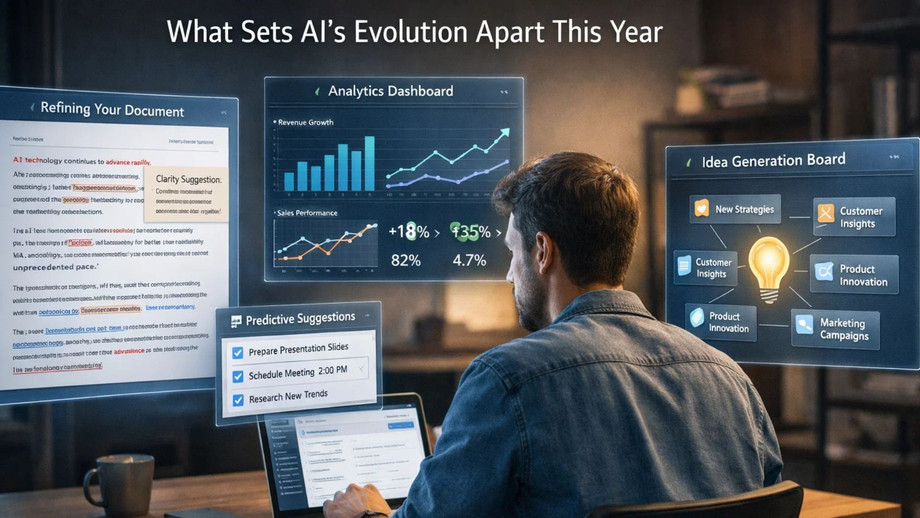
This shift has redefined what people mean when they talk about modern AI, because the value now lies in how seamlessly it blends into productivity rather than how many features it claims to have.
What Do Users Rely on Most in 2025?
People consistently turn to AI for three things above everything else:
- Instant clarity — turning unclear ideas, notes, or information into structured outputs.
- Faster creation — producing text, visuals, plans, summaries, strategies, and explanations in seconds.
- Decision support — analysing large volumes of data, highlighting patterns, and offering recommendations.
These three behaviours now account for the majority of everyday AI usage.
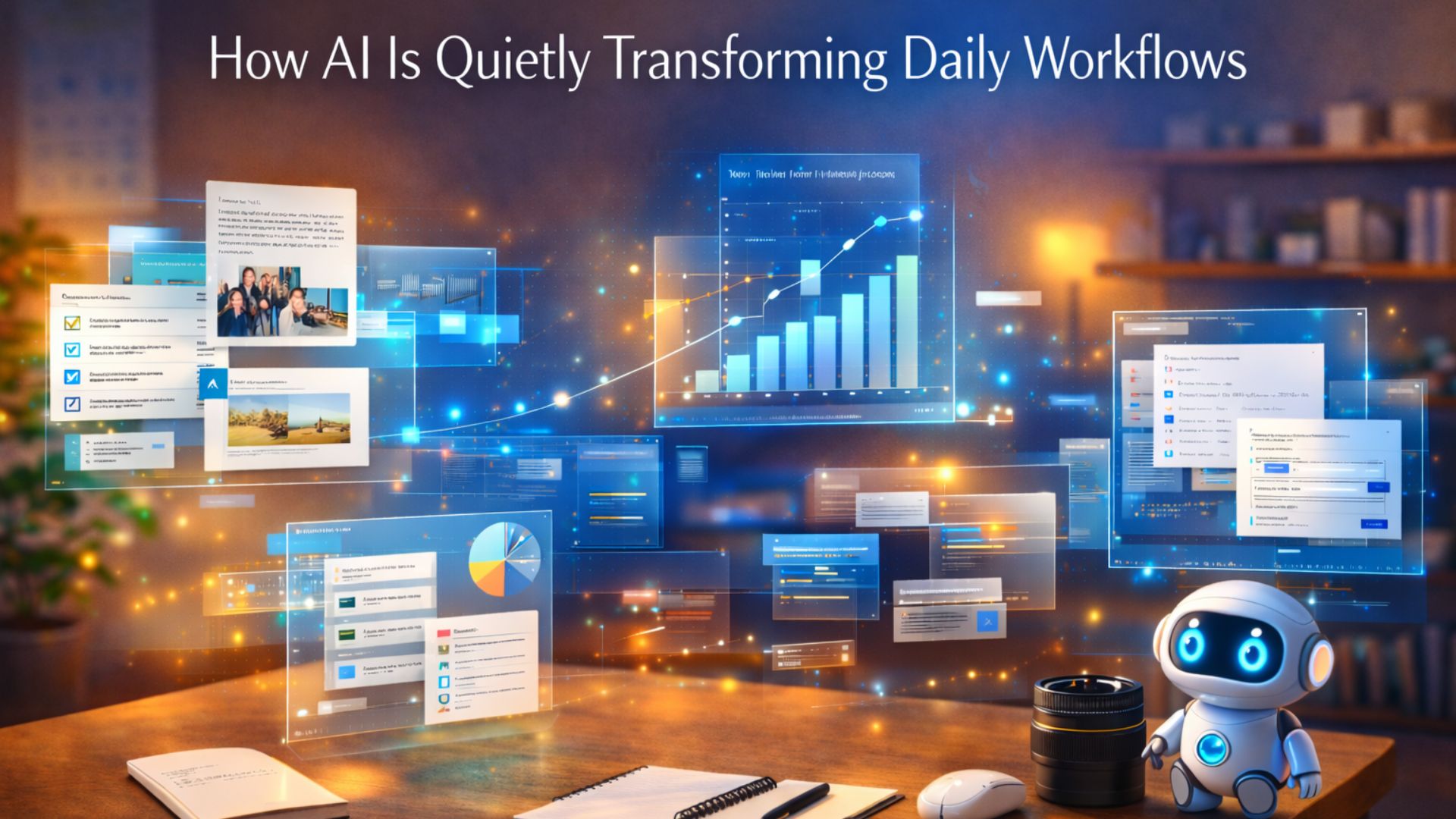
How AI Is Quietly Transforming Daily Workflows
Writing and Communication
AI now handles drafting, restructuring, tone adjustment, and multi-language adaptation with a level of nuance that mirrors human style. Emails, reports, proposals, descriptions, summaries, and scripts can be generated or refined instantly. Instead of staring at blank pages, people start with structured clarity.
Research and Learning
One of the biggest revolutions is speed. AI doesn’t just find information, it interprets it, compares multiple sources, highlights contradictions, and explains concepts at different complexity levels. This intelligent acceleration is exactly why the Top AI Tools 2025 are redefining how professionals research, analyze, and make decisions in real time. This eliminates hours of manual reading and makes learning dramatically faster.
Creative and Visual Workflows
2025 marks a turning point where visual generation feels like real artistic assistance rather than algorithmic randomness. Concepts, scenes, branding directions, storyboards, and product visuals can be created in seconds. Creativity becomes an iterative conversation, rather than a slow, technical process.
Planning, Strategy, and Analysis
Whether someone is building a project roadmap, evaluating trends, analysing spreadsheets, or modelling scenarios, AI now understands structure. It can break down goals, offer step-by-step plans, identify risks, and produce digestible insights from complex data.
Automation Without Technical Barriers
Perhaps the most significant change is that non-technical users can automate workflows in plain language. Tasks that once required scripts, integrations, or rules can now be created by simply describing the desired outcome.
Why Professionals Are More Dependent on AI Than Ever
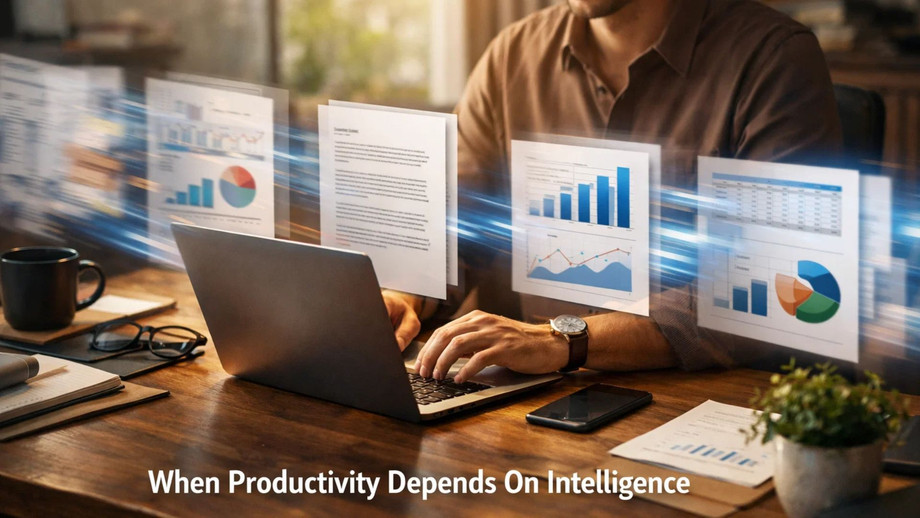
The real reason is efficiency. AI no longer feels like a productivity booster; it feels like an essential part of modern work. Time-consuming tasks collapse from hours to minutes. Complex tasks become approachable. Workloads shrink without sacrificing quality. The shift is so impactful that even people who never considered themselves “tech-driven” now rely on AI on a daily basis.
Who Benefits Most From These Advancements?
- Professionals managing communication and documentation
- Creative teams producing content under tight timelines
- Students and researchers working with large volumes of information
- Businesses that need predictable, automated workflows
- Entrepreneurs juggling multiple roles at once
In every case, AI acts as an extension of the user’s capability.
You can also watch: Animoto Review/Tutorial: How To Create A Video With Animoto In Less Than 15 Min?
Summary
Top AI Tools 2025 represent more than a collection of advanced applications; they signal a shift toward deeply intuitive, interconnected intelligence that blends seamlessly into everyday workflows. AI in 2025 is defined not by individual tools, but by a new standard of intelligence and integration that touches every part of modern work. The technology shapes writing, creativity, strategy, research, communication, and planning in ways that feel natural, not technical. It has become the silent engine behind productivity, enabling faster decisions, smoother collaboration, and a more fluid exchange of ideas. As automation becomes more anticipatory and context-aware, professionals experience greater clarity, reduced friction, and a noticeable elevation in the quality of output across tasks.
FAQ
1. What makes AI so powerful in 2025?
It can understand context, adapt to goals, and support end-to-end workflows.
2. Is AI still mainly for technical users?
No. Most platforms in 2025 are designed for everyday, non-technical use.
3. Is AI reliable for research and decision-making?
Yes, especially as systems now highlight sources, compare information, and analyse patterns.
 Greek
Greek
 English
 Arabic
 French
 Spanish
 Portuguese
 Deutsch
 Turkish
 Dutch
Dutch
 Italiano
 Russian
 Romaian
 Portuguese (Brazil)