

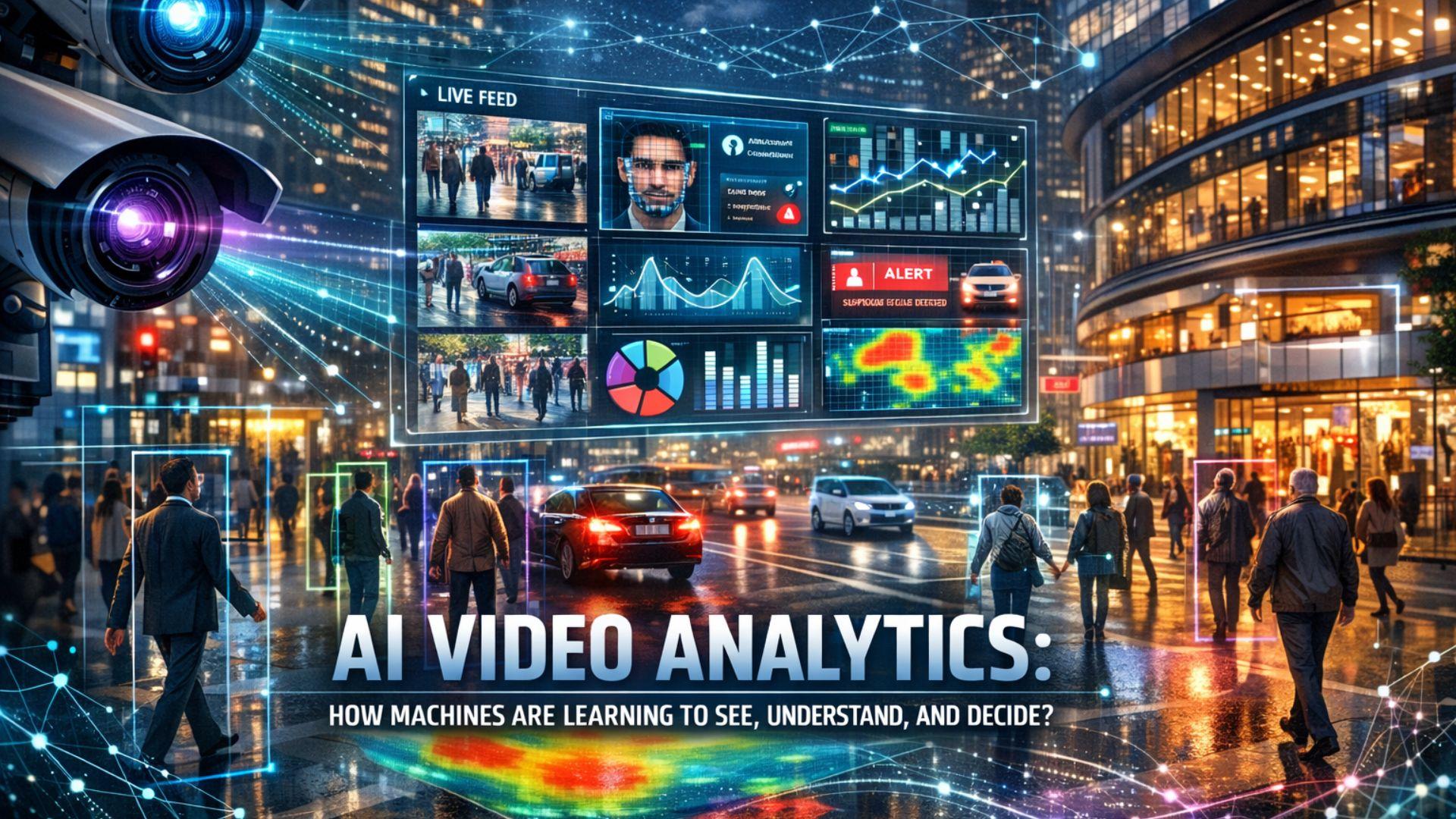
AI Video Analytics: How Machines Are Learning To See, Understand, And Decide?

That question sits at the heart of today’s fastest-growing visual technology. Businesses, cities, and institutions are no longer satisfied with passive video. They want answers, insights, and action in real time. This is exactly where AI video analytics steps in, transforming raw visuals into meaningful intelligence within seconds. At its core, this technology uses artificial intelligence to interpret video streams, detect patterns, recognize behavior, and trigger informed responses. Instead of reviewing hours of footage after an incident, organizations can now identify risks, opportunities, and trends as they happen.
What Is AI Video Analytics and Why Does It Matter?
AI video analytics refers to the application of machine learning and computer vision models to video data so systems can automatically understand visual content. It allows cameras to move beyond observation and into interpretation. This matters because video is one of the richest data sources available today. From security cameras and traffic feeds to retail stores and manufacturing floors, visual data holds insights that were previously inaccessible due to human limitations. AI removes that bottleneck by analyzing video continuously, accurately, and at scale.
The immediate value lies in faster decision-making, reduced human effort, and improved situational awareness. Whether the goal is safety, efficiency, or customer experience, intelligent video analysis creates a measurable advantage.
How Intelligent Video Analysis Actually Works?
Behind the scenes, advanced algorithms process each frame of video as structured data. The system identifies objects, tracks movement, and understands context by comparing visual inputs against learned patterns. Over time, the models improve by learning from new scenarios, lighting conditions, and environments. This continuous learning makes the system more reliable than rule-based monitoring, which often fails when conditions change. The true power emerges when insights are delivered in real time. Alerts, dashboards, and automated responses allow organizations to act instantly instead of reacting later.
Key Capabilities That Redefine Visual Intelligence
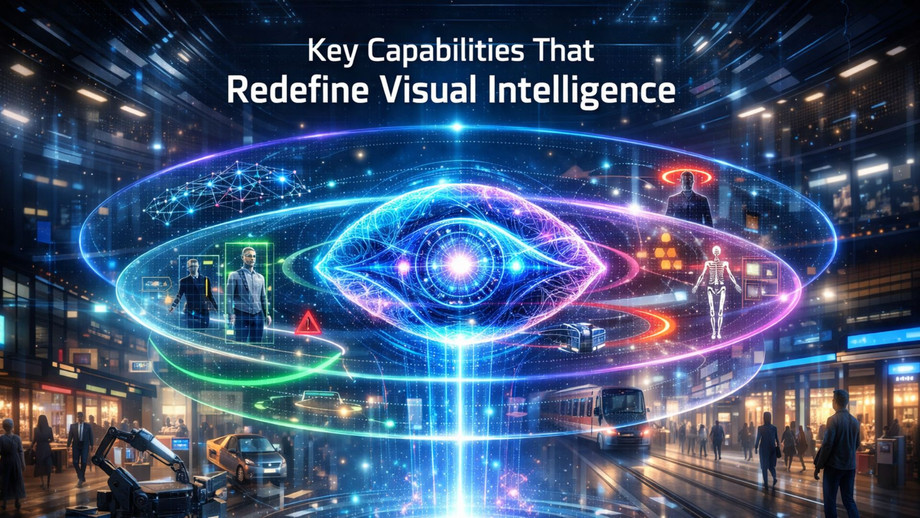
Modern video intelligence platforms are capable of far more than simple motion detection. Powered by intelligent video analytics, they can distinguish between normal and abnormal behavior, understand spatial relationships, and adapt to different environments without constant reprogramming. One of the most impactful abilities is behavioral analysis. Instead of asking “Did something move?”, systems now ask “Does this behavior indicate a risk or opportunity?” That shift dramatically increases relevance and reduces false alerts. Another important capability is scalability. As video volumes grow, AI ensures consistent performance without requiring proportional increases in human monitoring.
Real-World Applications Across Industries
In smart cities, intelligent video systems help manage traffic flow, improve public safety, and support emergency response. Instead of relying solely on manual observation, authorities gain continuous visibility into evolving urban conditions. Retail environments use video intelligence to understand customer behavior, optimize store layouts, and reduce loss. Insights drawn from movement patterns and dwell times help improve both sales and shopper satisfaction. In industrial settings, visual intelligence enhances workplace safety and operational efficiency. It can identify unsafe actions, equipment misuse, or process bottlenecks before they result in costly incidents.
Healthcare and transportation sectors also benefit, using visual analysis to improve patient safety, crowd management, and service reliability.
Why Does AI Video Analytics Outperform Traditional Surveillance?
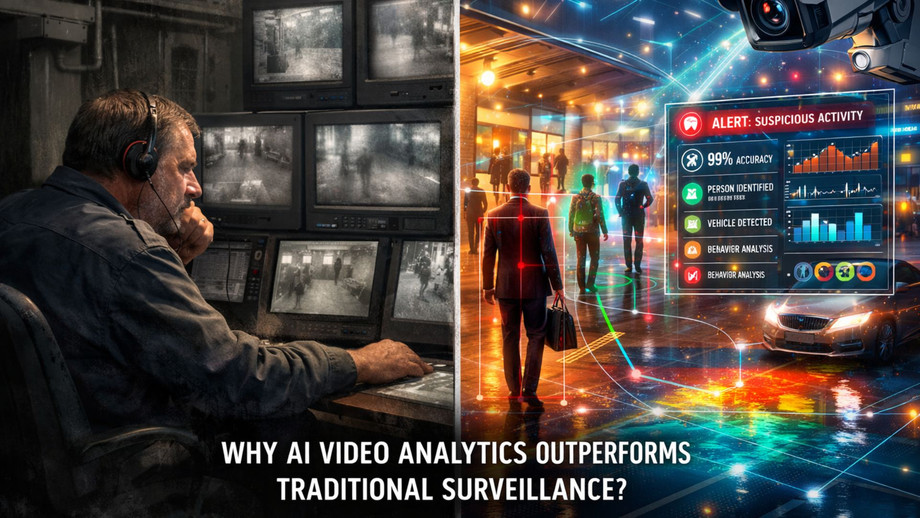
Traditional surveillance systems are reactive by design. They store footage but rely on humans to interpret it later. This approach is slow, error-prone, and often ineffective when rapid response is required. Video intelligence software changes that model by enabling proactive monitoring. The system does not just capture events; it understands and prioritizes them, leading to faster interventions, fewer blind spots, and better use of human resources. Another key advantage is consistency; unlike human operators, intelligent systems do not fatigue or lose focus, ensuring continuous performance regardless of scale or duration.
Ethical Use, Privacy, and Responsible Deployment
As visual intelligence becomes more powerful, ethical considerations grow in importance. Responsible deployment requires transparency, data protection, and clear usage policies. Organizations must ensure that systems are designed to respect privacy and comply with regulations. When implemented thoughtfully, intelligent video solutions can enhance safety and efficiency without compromising individual rights. The future of this technology depends not only on innovation but also on trust.
The Future of Visual Intelligence
The next phase of visual intelligence will focus on deeper contextual understanding and closer integration with other data sources. Video insights will increasingly combine with sensors, analytics platforms, and decision systems to provide a holistic view of environments.
As computing moves closer to the edge, real-time intelligence will become faster and more accessible. This evolution will further reduce response times and unlock new use cases across industries.
Summary:
AI Video Analytics is transforming how visual data is interpreted by enabling machines to move beyond simple recording and actively understand scenes, behaviors, and patterns in real time. By combining computer vision and artificial intelligence, this technology helps organizations make faster, smarter decisions across areas like security, traffic management, retail, and smart cities. Instead of relying on manual monitoring, intelligent systems analyze video continuously, detect anomalies, and provide actionable insights that improve safety, efficiency, and overall situational awareness.
FAQs: Common Questions About Intelligent Video Analysis
Is this technology only used for security purposes?
No. While security is a major application, intelligent video analysis is widely used in retail, healthcare, transportation, manufacturing, and smart city planning.
Does it require constant human supervision?
The system operates autonomously, but human oversight is typically used for decision validation and strategy, not continuous monitoring.
Can it adapt to different environments?
Yes. Modern systems learn from their surroundings and improve accuracy over time, even as conditions change.
Is it expensive to implement?
Costs vary based on scale and use case, but automation and efficiency gains often result in long-term savings. In a world overflowing with visual data, the ability to truly understand what cameras see is no longer optional. It is becoming essential for smarter decisions, safer environments, and more responsive systems.