

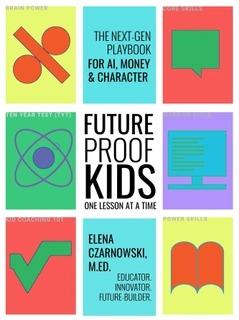
Why the Future of Education Must Teach Kids How to Think, Not Just What to Learn

By Elena Czarnowski
Education is at a crossroads.
As artificial intelligence, automation, and digital tools rapidly reshape the world, our children are being prepared for a future that no longer exists. While test scores and grades still dominate the conversation, the skills that truly determine success critical thinking, adaptability, ethical judgment, and confidence are often left out of the curriculum.
It’s time to ask a different question: Are we teaching kids how to think, or simply what to memorize?
The Problem With Traditional Education Models
For decades, education has focused on standardization. While structure has its place, an overemphasis on rote learning leaves students unprepared for real-world challenges. Today’s kids will enter careers that don’t yet exist, using technologies that are still evolving.
What won’t change, however, is the need for:
-
Independent thinking
-
Ethical decision-making
-
Financial literacy
-
Emotional intelligence
-
Purpose-driven leadership
These are not “extras.” They are foundational skills.
Raising Ethical Thinkers in the Age of AI
Artificial intelligence is no longer a future concept—it’s part of daily life. Children interact with algorithms long before they understand how they work or how they influence decisions.
Teaching kids about AI should not start with fear, nor should it focus solely on technical skills. Instead, we must help them understand:
-
How technology shapes behavior and choices
-
Why ethics and accountability matter
-
Where human creativity, empathy, and values fit in
When children learn to see technology as a tool—not a replacement for human judgment—they become empowered rather than overwhelmed.
Confidence Is Built Through Understanding
One of the most overlooked outcomes of education is confidence.
Confidence grows when children understand why they are learning something and how it applies to their lives. Whether it’s managing money, setting goals, or solving complex problems, real-world relevance turns information into empowerment.
When kids feel capable, they are more likely to:
-
Take healthy risks
-
Ask better questions
-
Persist through challenges
-
Lead with integrity
A New Definition of “Future-Ready”
Being future-ready isn’t about knowing all the answers it’s about being equipped to find them.
It means raising kids who are curious, values-driven, financially literate, and comfortable navigating change. It means preparing them not just for college or careers, but for life.
That shift requires educators, parents, and communities to rethink what success looks like in education today.
Moving Forward
The future belongs to children who can think critically, act ethically, and adapt confidently. If we want to prepare them for what lies ahead, we must move beyond outdated models and embrace education that is human-centered, future-focused, and grounded in real-world skills.
Because education should do more than inform—it should empower.


