
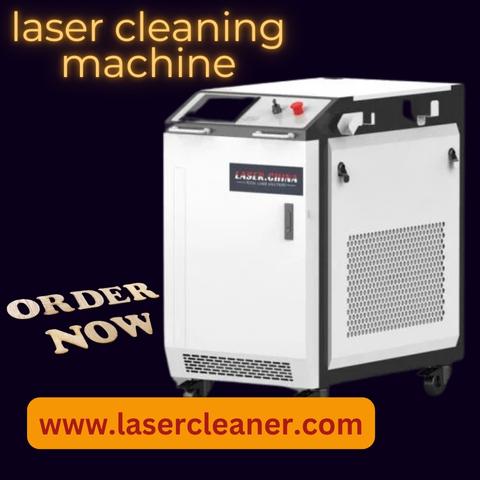
Laser Cleaning Machine: Revolutionary Technology for Precise, Efficient, and Safe Surface Cleaning

The laser cleaning machine is transforming industries with its advanced precision and efficiency. Unlike traditional cleaning methods, which often rely on abrasive chemicals, harsh solvents, or mechanical scrubbing, the laser cleaning machine utilizes the power of focused laser beams to remove unwanted contaminants, rust, paint, and coatings from surfaces. This modern technology provides a non-contact, eco-friendly approach to surface preparation and maintenance, making it highly valuable across multiple sectors.
Industries such as automotive manufacturing, aerospace, shipbuilding, electronics, and heritage preservation increasingly rely on laser cleaning machines for their ability to deliver precise cleaning without causing damage to underlying materials. The principle of operation is simple yet highly effective: the laser emits a concentrated beam of light that interacts with the surface layer, breaking down impurities or coatings into small particles or vapor, which can then be removed. This precision allows operators to target only the areas that require cleaning, minimizing material loss and reducing overall production downtime.
Laser cleaning machines come in various configurations and power levels, allowing them to handle everything from delicate electronics to large-scale industrial machinery. In automotive workshops, they are used to clean engine components, molds, and metal parts, removing rust and oil residues to ensure optimal performance. Aerospace engineers use laser cleaning machines to maintain aircraft components, carefully removing oxidation and contaminants without compromising structural integrity. Shipyards utilize these machines to prepare metal surfaces before coating, ensuring long-lasting paint adhesion while reducing the use of toxic chemicals.
One of the standout aspects of the laser cleaning machine is its environmental impact. Traditional cleaning methods frequently generate hazardous waste and chemical runoff, which require careful disposal. Laser cleaning machines, on the other hand, reduce reliance on chemical cleaners and minimize waste production. The process is dry and highly controlled, with dust and residues easily captured by integrated extraction systems. This makes it safer for workers and reduces environmental hazards, aligning with stricter industrial regulations and sustainability initiatives.
Laser cleaning machines are also praised for their speed and efficiency. Unlike sandblasting or chemical treatments that may require multiple steps and extended curing times, a laser cleaning machine can complete surface preparation in a fraction of the time. Operators can adjust laser intensity, pulse frequency, and scanning speed to achieve consistent results across different materials, including metals, plastics, composites, and ceramics. The ability to fine-tune the process ensures that sensitive surfaces, such as historical artifacts or precision tools, are cleaned effectively without damage.
Maintenance and operational considerations of a laser cleaning machine are straightforward compared to traditional methods. Most modern units are designed with user-friendly interfaces, programmable cleaning patterns, and automated safety features. The non-contact nature of the laser reduces wear on equipment, minimizing the need for frequent maintenance or replacement parts. Additionally, many machines are portable, allowing them to be used in workshops, factories, or even remote field locations. This versatility increases their value for businesses that require flexible cleaning solutions.
In addition to industrial applications, laser cleaning machines are increasingly utilized in research and laboratory environments. Scientists and engineers rely on these machines to prepare samples, clean molds, or remove thin films from experimental setups with precision that traditional tools cannot match. The ability to control parameters such as laser wavelength and power ensures that even microscopic surfaces can be cleaned without introducing contaminants. This level of accuracy supports high-quality research outcomes and enhances experimental reproducibility.
The technological advancements in laser cleaning machines continue to expand their applications. Innovations such as fiber lasers, pulsed lasers, and high-power continuous-wave lasers allow operators to select the optimal solution for a given cleaning task. Fiber lasers, for example, are valued for their efficiency and long service life, while pulsed lasers offer precise ablation for delicate surfaces. These innovations ensure that the laser cleaning machine remains a versatile and future-ready tool for industrial, scientific, and cultural preservation tasks.
Another significant aspect of the laser cleaning machine is safety. While the laser beam is powerful, modern systems incorporate advanced shielding, interlocks, and protective eyewear requirements to ensure operator safety. Unlike chemical cleaning, which can cause burns, respiratory hazards, or environmental contamination, laser cleaning provides a controlled, precise, and contained process. Operators can achieve superior results without exposure to harmful substances, making it a preferred choice for industries with strict safety regulations.
Adoption of laser cleaning machines is increasing globally, driven by industrial modernization and the demand for cleaner, faster, and safer surface preparation methods. Companies investing in this technology report higher efficiency, reduced operational costs, and improved product quality. As industries continue to prioritize precision, sustainability, and worker safety, the laser cleaning machine stands out as a transformative solution.
In conclusion, the laser cleaning machine represents a major shift in how surfaces are prepared and maintained across industries. Its combination of precision, efficiency, environmental friendliness, and versatility makes it an essential tool for modern manufacturing, maintenance, and scientific applications. From industrial workshops to research laboratories, laser cleaning machines deliver superior cleaning performance while reducing risks associated with traditional methods. By adopting this advanced technology, industries can achieve higher productivity, lower environmental impact, and consistent, high-quality results.