
Artificial Intelligence (AI) in Aviation Market: Drivers and Opportunities

The Artificial Intelligence (AI) in Aviation Market is rapidly transforming the aviation industry as airlines, airports, and aerospace manufacturers increasingly integrate advanced digital technologies into their operations. Artificial intelligence solutions—including machine learning, computer vision, predictive analytics, and natural language processing—enable aviation companies to automate complex processes, analyze large datasets, and improve operational decision-making. These technologies are helping the aviation sector enhance operational efficiency, improve passenger experiences, and strengthen safety management systems.
The aviation industry generates enormous volumes of operational data from aircraft sensors, flight operations, weather monitoring systems, and passenger management platforms. AI-powered analytics solutions help aviation stakeholders analyze this data in real time, enabling them to identify operational inefficiencies and optimize airline operations. As aviation companies continue to prioritize digital transformation and automation, AI technologies are becoming a crucial component of modern aviation infrastructure.
According to market research insights, the Artificial Intelligence in Aviation Market is projected to reach approximately US$ 9.5 billion by 2031, growing at a CAGR of around 38.0% during the forecast period from 2025 to 2031. The rapid adoption of AI-driven analytics, predictive maintenance technologies, and automated aviation systems is significantly contributing to market growth.
Download Sample PDF Copy of this Report:
https://www.theinsightpartners.com/sample/TIPRE00004319
Artificial Intelligence (AI) in Aviation Market Overview
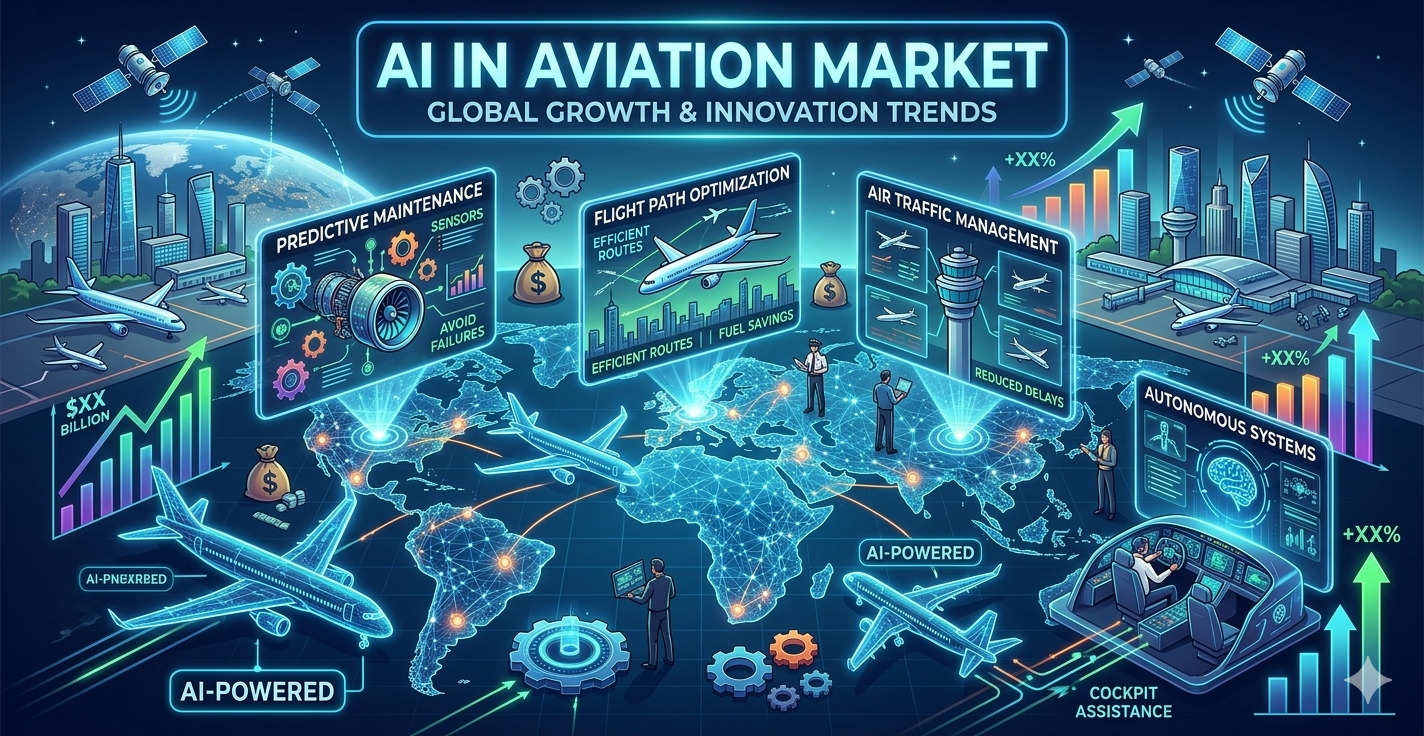
Artificial intelligence technologies are increasingly being implemented across multiple aviation applications, including aircraft maintenance, flight operations optimization, air traffic management, and passenger service management. These intelligent systems help airlines and airport authorities automate operations, reduce operational costs, and improve safety standards.
AI-driven predictive maintenance systems play a major role in modern aviation operations. Aircraft are equipped with thousands of sensors that continuously generate data about engine performance, system status, and environmental conditions. AI algorithms analyze this data to detect potential technical failures before they occur, allowing airlines to perform maintenance proactively and reduce operational disruptions.
In addition, airports are adopting AI-powered passenger management technologies such as biometric boarding systems, automated baggage tracking solutions, and intelligent security systems. These technologies improve operational efficiency and enhance passenger convenience, making air travel more seamless and secure.
Key Market Drivers
Rising Demand for Predictive Maintenance
One of the primary drivers of the Artificial Intelligence in Aviation Market is the increasing adoption of predictive maintenance technologies. Aircraft maintenance is a critical and costly aspect of airline operations, and unexpected mechanical failures can cause major disruptions and financial losses.
AI-powered predictive maintenance platforms analyze aircraft sensor data and maintenance records to identify early warning signs of equipment failure. This allows airlines to perform maintenance before a failure occurs, reducing downtime and improving aircraft reliability. Industry studies show that more than 50% of aviation companies rely on AI for predictive maintenance and anomaly detection, highlighting the growing importance of AI in aviation safety and maintenance strategies.
Growing Focus on Operational Efficiency
Another important driver of market growth is the aviation industry's increasing focus on improving operational efficiency. Airlines operate in a highly competitive environment where cost optimization and operational reliability are essential for profitability.
AI-powered flight optimization platforms analyze weather conditions, air traffic patterns, and fuel consumption data to determine the most efficient flight routes. These technologies help airlines reduce fuel consumption, minimize flight delays, and improve overall operational performance. By optimizing operational workflows, AI technologies enable aviation companies to enhance efficiency and reduce operational expenses.
Expansion of Smart Airports
The development of smart airport infrastructure is also driving the growth of the Artificial Intelligence in Aviation Market. Airports worldwide are implementing AI-powered systems to manage passenger traffic, enhance security operations, and streamline airport management processes.
AI-based technologies such as facial recognition systems, automated baggage handling solutions, and intelligent surveillance platforms help airports improve operational efficiency and maintain high security standards. With global air passenger traffic expected to grow significantly in the coming years, smart airport technologies will play a critical role in managing airport operations effectively.
Integration of AI with Big Data and IoT
The integration of artificial intelligence with big data analytics and Internet of Things (IoT) technologies is another major driver of market growth. Aircraft systems and airport infrastructure generate massive volumes of real-time operational data.
AI-powered analytics platforms process this data to provide valuable insights that help airlines optimize flight operations and improve safety management. For instance, AI algorithms can monitor aircraft performance during flights and detect operational anomalies that may indicate potential safety risks. The ability to analyze large datasets in real time makes AI an essential tool for modern aviation management.
Emerging Market Opportunities
Enhancing Passenger Experience
Improving passenger experience presents a major opportunity for AI adoption in the aviation sector. Airlines are increasingly deploying AI-powered customer service platforms such as chatbots, digital assistants, and automated customer support systems.
These AI-driven platforms provide passengers with real-time flight updates, baggage tracking information, and personalized travel recommendations. Personalized services enhance customer satisfaction while also improving airline operational efficiency.
AI-Powered Air Traffic Management
Another key opportunity lies in the development of AI-driven air traffic management systems. As global air travel continues to grow, traditional air traffic control systems face increasing pressure to manage congested airspace.
AI-powered air traffic management solutions analyze flight schedules, weather conditions, and airspace utilization patterns to optimize air traffic flow. These systems help reduce delays, improve airspace efficiency, and enhance overall aviation safety.
Increasing Investments in Digital Aviation Technologies
Governments, aviation authorities, and private organizations are investing heavily in digital aviation technologies. These investments are accelerating the adoption of AI-based aviation solutions across airlines, airports, and aircraft manufacturers.
As aviation companies continue to modernize their infrastructure and adopt advanced technologies, the Artificial Intelligence in Aviation Market is expected to experience significant growth opportunities in the coming years.
Key Players in the Artificial Intelligence (AI) in Aviation Market
The Artificial Intelligence in Aviation Market includes several global aerospace manufacturers and technology companies that are actively investing in AI innovation. Key market participants include:
- Boeing
- Airbus
- Honeywell International Inc.
- IBM Corporation
- Microsoft Corporation
- Intel Corporation
- General Electric Company
- Thales Group
- Raytheon Technologies Corporation
- Rolls-Royce plc
These companies are focusing on technological innovation, strategic partnerships, and advanced AI-based aviation solutions to strengthen their market presence.
About Us
The Insight Partners is a leading global market research and consulting firm that provides reliable and actionable insights across multiple industries. Our research reports deliver comprehensive market intelligence, competitive landscape analysis, and industry forecasts that help organizations make informed business decisions. We specialize in providing high-quality research across sectors such as aerospace and defense, healthcare, information technology, telecommunications, and manufacturing.
Contact Us
The Insight Partners
Email: [email protected]
Phone: +1-646-491-9876
Website: https://www.theinsightpartners.com/


