


How Does Dylan Thomas Write About the Passage of Time?
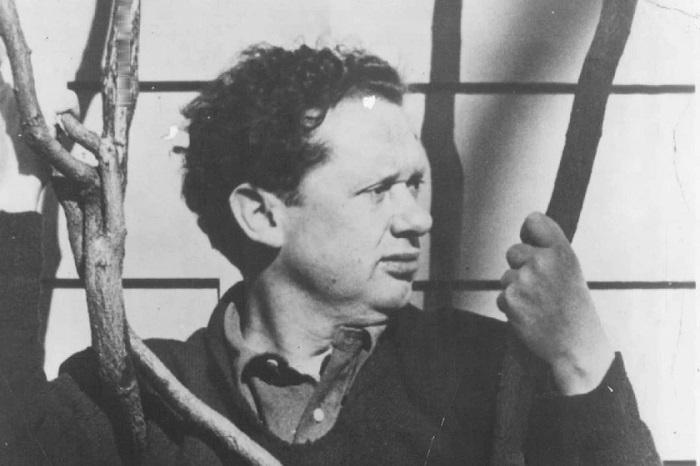
Dylan Thomas remains one of the most evocative and musically gifted poets of the twentieth century, renowned for his lush imagery, rhythmic power, and emotional depth. Among the many themes that permeate his work, time stands out as one of the most complex and persistent. Thomas does not approach time simply as a ticking progression or a chronological marker; instead, he envisions it as a living force intertwined with memory, nature, childhood, decay, renewal, and ultimately, mortality. Through poems such as “Fern Hill,” “Do Not Go Gentle into That Good Night,” “Poem in October,” and others, he constructs a vision of time that is at once enchanting and unforgiving—beautiful in its cycles yet painful in its inevitability. To understand how Dylan Thomas writes about the passage of time, one must explore his portrayals of youth, aging, memory, nature, and the defiant human spirit confronting the limits of existence.
Dylan Thomas and the Celebration of Youth
The Lyrical Glow of Innocence
In many of Thomas’s poems, childhood glimmers as a golden sanctuary untouched by the burdens of adulthood. “Fern Hill,” one of his most celebrated works, immerses readers in a world of pastoral freedom and innocence. Thomas writes with a vivid, almost dream-like nostalgia, suggesting that youth exists outside of ordinary time. The child-speaker roams “green and golden,” untroubled by the knowledge of mortality. This sense of timelessness is central to Thomas’s treatment of youth: he portrays it as a moment suspended in glowing imagery, where the world feels endless and overflowing with possibilities.
Yet, even within this radiant portrayal, Thomas embeds the shadow of time. The beauty of “Fern Hill” is heightened precisely because it is fleeting. The later stanzas introduce the realization that the freedom of youth was granted only because time had not yet made itself known. The arc of the poem shows innocence gradually dissolving into awareness, revealing that childhood’s enchantment is possible only in retrospect. Thomas therefore uses youth not simply as a period of life, but as a poetic lens through which the passage of time becomes painfully clear.
Nostalgia as a Measure of Loss
Thomas’s nostalgia is never purely sentimental. It often functions as a tool for understanding the cost of time’s passage. As an adult looking back, the poet recognizes that the bliss of youth was predicated on ignorance of time’s progression. This tension gives poems like “Fern Hill” their emotional force. Thomas suggests that time is not merely a chronological process but a revelation—something that grows heavier as one becomes more conscious of it.
Aging and the Burden of Time
The Inevitable Drift Toward Mortality
Thomas frequently portrays aging as an encounter with the inescapable truth of mortality. In “Poem in October,” he writes during a reflective moment on his thirtieth birthday. Although still young, he perceives a turning point, a shift toward a deeper recognition of time’s burdens. The poem contrasts the lively natural world around him with the internal reckoning of age. While the landscape embodies renewal and movement, the poet’s awareness underscores change and impermanence.
This duality—between the endurance of nature and the fragility of human life—is a cornerstone of Thomas’s treatment of aging. He recognizes that while the natural world cycles endlessly through seasons, human experience is linear and terminal. This is not a source of despair alone; for Thomas, it is also a call to cherish the present and honor memory.
The Poetic Voice as Witness to Time’s Movement
Even as Thomas writes about aging, he maintains an active, vibrant poetic voice. He is not a passive observer of time but a participant who records, questions, and resists its effects. His poems often merge inner reflection with outward imagery, suggesting that time shapes not only bodies and events but also consciousness itself. The poet becomes a figure who bears witness to the intricacies of temporal change, translating them into music and metaphor.
Time’s Relationship with Memory
Memory as a Bridge Between Past and Present
For Thomas, memory is both a blessing and a wound. It allows him to revisit the joys of youth but also confronts him with the reality that those moments are irretrievably lost. In poems where he returns to scenes of childhood or significant personal experiences, memory becomes a meeting point between the temporal self and the timeless emotional truth of the past.
Through memory, Thomas collapses temporal boundaries. Past experiences feel immediate, even though they are shaped by an adult’s understanding. This fluidity of time—where the past lives vividly within the present—reveals Thomas’s belief that memory itself defies linear chronology. Instead, it acts as a living force that allows the poet to inhabit multiple temporal states.
Emotional Time vs. Chronological Time
Thomas often distinguishes between emotional and chronological time. Emotional time is expansive, able to stretch, linger, or contract based on the intensity of experience. Chronological time, by contrast, is unyielding. In his work, emotional time often appears more real and significant than the clock-bound world. This contrast enables Thomas to explore the internal drama of time’s passage—how it feels, not merely how it functions.
Nature as a Clock of Eternity
Cycles of Growth and Decay
Nature plays a central role in Thomas’s exploration of time. The cyclical movements of seasons, tides, and sunlight become metaphors for human life. While humans age irreversibly, nature renews itself endlessly. This juxtaposition appears throughout his poetry, reminding readers of both the beauty and the tragedy embedded in the natural order.
In “Poem in October,” the shifting autumnal landscape becomes a symbol of transition. The poet walks through fields and along the shore, witnessing the world’s vibrancy even as he reflects on personal change. Nature thus becomes a mirror in which the poet sees both continuity and loss.
The Eternal and the Ephemeral
Thomas’s fascination with nature derives partly from its dual nature: it is eternal and ephemeral at once. A single season passes quickly, yet the cycle repeats without fail. This tension resonates deeply with Thomas’s understanding of human life. Moments pass and cannot be reclaimed, but the patterns of life echo across generations. Time, therefore, is not only a force of destruction but also one of renewal and continuity.
Defiance and the Human Spirit
Resisting Time’s Finality
One of Thomas’s most famous poems, “Do Not Go Gentle into That Good Night,” stands as a testament to human defiance in the face of time’s ultimate consequence: death. In this villanelle, Thomas urges his dying father to fight against decline, to “rage, rage against the dying of the light.” Here, time becomes the enemy, and resistance becomes an act of spiritual strength.
The poem’s driving rhythm and repetition reflect the intensity of the struggle. Even though time will inevitably triumph, Thomas insists that the human spirit must confront it with passion and dignity. This tension between acceptance and rebellion animates much of his work.
The Poet as Keeper of Flame
Thomas often positions himself as someone who preserves the human experience in the face of time’s erasure. Through metaphor, sound, and imagery, he captures fleeting moments and infuses them with lasting resonance. Poetry becomes a means of resisting oblivion, of giving shape to what would otherwise be lost.
Conclusion
Dylan Thomas writes about the passage of time with a profound blend of lyricism, nostalgia, defiance, and existential insight. His poems explore youth as a radiant but fragile sanctuary, aging as a deepening encounter with mortality, memory as a bridge that defies temporal boundaries, nature as a cyclical mirror of human experience, and death as both inevitable and worthy of resistance. Through these themes, Dylan Thomas crafts a poetic universe where time is not simply an external force but an intimate companion—shaping identity, provoking reflection, and inspiring a fierce appreciation for life’s fleeting beauty. His work endures because it speaks to the universal human experience of moving through time, cherishing joy, mourning loss, and seeking meaning in the relentless flow of existence.

 English
 Arabic
 French
 Spanish
 Portuguese
 Deutsch
 Dutch
Dutch
 Italiano
 Russian
 Romaian
 Portuguese (Brazil)
 Greek
Greek