


What Are the Limitations of Vacuum Pressure Gauges in Industrial Settings?
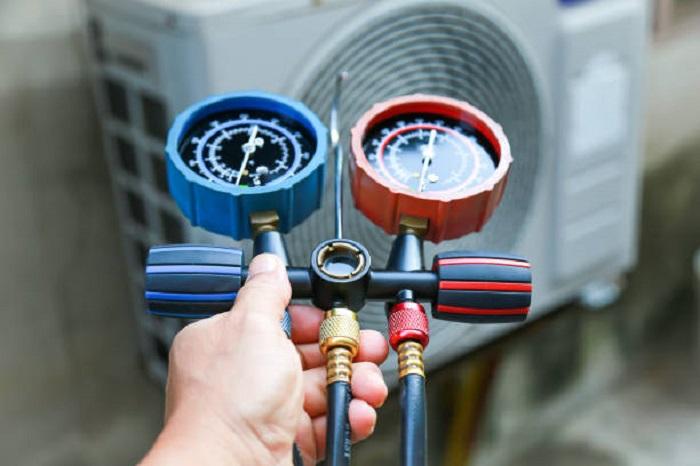
Vacuum measurement plays a crucial role in industrial systems ranging from semiconductor fabrication to pharmaceutical production, food packaging, high-vacuum metallurgy, HVAC processes, and laboratory research. Because many industrial operations depend on maintaining precise vacuum levels, the reliability of Vacuum Pressure Gauges becomes essential. Yet, despite their importance, these instruments come with a set of limitations that engineers must understand to ensure accurate measurement and system stability. This essay examines the technical, environmental, and operational constraints that affect vacuum gauges and explains why they may not always provide perfect performance in industrial environments.
The Measurement Challenges of Vacuum Pressure Gauges
The Difficulty of Measuring Extremely Low Pressures
Vacuum measurement becomes increasingly complex as pressure decreases. Many types of Vacuum Pressure Gauges rely on physical principles that begin to break down when molecules in the system become sparse. Mechanical gauges such as Bourdon tubes or diaphragm gauges cannot effectively respond to extremely low pressures because the force exerted on their sensing elements is too small to cause measurable movement.
At deeper vacuum levels, such as those used in semiconductor manufacturing or cryogenic applications, thermal conductivity, ionization, or capacitance-based gauges must be used. Even these more advanced gauges struggle with limitations when the pressure approaches ultrahigh-vacuum conditions. Ionization gauges may lose sensitivity or drift, and thermal gauges become inaccurate because heat transfer changes in unpredictable ways at extremely low molecular densities.
Calibration Drift Over Time
All vacuum gauges rely on calibration that ties their readings to known reference conditions. Industrial environments expose these gauges to temperature fluctuations, vibration, contamination, and prolonged operation—all of which cause gradual calibration drift. Over time, a gauge may begin to display pressure readings that vary from actual system values, leading to operational inefficiencies or even safety hazards.
While regular recalibration can minimize this issue, it also increases maintenance cost and downtime. In large facilities with numerous gauges installed across different process lines, maintaining accurate calibration becomes an ongoing engineering challenge.
Environmental Factors That Limit Vacuum Gauge Performance
Temperature Sensitivity and Thermal Effects
Temperature changes can significantly affect the accuracy and lifespan of Vacuum Pressure Gauges. In many industrial settings, equipment surfaces, pipelines, and machinery produce heat, causing local temperature shifts. Since materials expand or contract with temperature, mechanical gauges experience small but impactful variations in sensor position or elasticity.
Even electronic gauges are not immune; thermal conductivity gauges, for instance, depend on the ability of gas molecules to carry heat from a heated filament. If temperature changes, the filament behaves differently, causing inaccurate readings. Thermal drift within circuitry can also alter signal interpretation. Thus, maintaining stable temperature conditions becomes essential for reliable vacuum measurement.
Vibration and Mechanical Shock
Industrial environments often expose gauges to vibration from motors, pumps, compressors, and heavy machinery. Mechanical gauges are particularly susceptible, as vibration can cause premature wear, pointer oscillation, or total failure of internal springs or diaphragms.
Even electronic Vacuum Pressure Gauges can suffer if vibration introduces noise into sensor readings or damages delicate internal components. This becomes especially critical in high-precision manufacturing plants where vacuum stability is essential for product quality.
Contamination and Process-Related Limitations
Damage from Chemical Exposure and Particulates
Vacuum Pressure Gauges frequently come in direct contact with the process media. In industries involving corrosive chemicals, solvents, plasma processes, or organic vapors, chemical attack can degrade sensor surfaces. Materials such as thin-film coatings, heated filaments, or membranes may corrode or accumulate residue.
Contamination affects different gauge types in specific ways. For example, thermal gauges become inaccurate when layers of residue form on the heating element, changing thermal conductivity. Ionization gauges can be rendered useless if particulates coat electrodes. This contamination can lead to false readings, slower response times, or complete sensor failure, requiring costly replacement.
Outgassing and Backstreaming Effects
In high-vacuum systems, contaminants inside the gauge may themselves release gas molecules, causing what engineers call outgassing. Oil-filled mechanical gauges or poorly maintained sensors can introduce contaminants back into the vacuum line, affecting system purity.
In processes like cryogenics, semiconductor lithography, or coating systems, even small impurities drastically impact product quality. This makes some types of Vacuum Pressure Gauges unsuitable unless they are oil-free, contaminant-resistant, and thoroughly cleaned before installation.
Limitations of Specific Gauge Types
Mechanical Gauges and Low-Vacuum Inaccuracy
Mechanical vacuum gauges such as Bourdon tubes or bellows gauges are rugged and inexpensive but have limited accuracy in vacuum ranges. Their readings become nonlinear as pressure decreases, and mechanical hysteresis can distort pointer movement. These gauges perform adequately in rough-vacuum environments but cannot meet the precision requirements of high-vacuum systems.
Thermal Conductivity Gauges and Gas-Dependent Readings
Pirani and thermocouple gauges measure vacuum by examining heat transfer from a heated wire. However, the relationship between pressure and thermal conductivity varies greatly between gases. A gauge calibrated for air will give incorrect readings if used with argon, helium, hydrogen, or other process gases.
Since many industrial systems involve mixed gases or variable composition, thermal gauges can become unreliable without frequent recalibration or correction factors.
Ionization Gauges and Their Operational Restrictions
Ionization gauges offer sensitivity to extremely low pressures but come with limitations. Their filaments are fragile and can fail due to contamination or overheating. They also require high voltage, making them more complex to integrate into general industrial settings. Furthermore, they cannot be operated at high pressures without risking filament burnout, requiring additional control circuitry.
Installation and System Integration Challenges
Sensitivity to Orientation and Mounting Conditions
Some Vacuum Pressure Gauges perform differently depending on their orientation. Mechanical gauges may read differently if mounted horizontally instead of vertically due to internal component alignment. Thermal gauges may be affected by local convection currents. Ionization gauges require specific positioning to avoid magnetic interference.
In complex piping systems, finding suitable installation points that support accurate readings—without turbulence, leaks, or thermal gradients—becomes difficult.
Response Time Limitations
Not all vacuum gauges respond quickly to pressure changes. Mechanical gauges may lag due to inertia. Thermal gauges require several seconds for heated filaments to adjust to new conditions. In fast-acting industrial processes where vacuum levels fluctuate rapidly, slow response time can make certain gauges impractical.
In applications like vacuum packaging, semiconductor etching, or leak detection, delayed readings can affect product quality or mask dangerous system conditions.
External System Factors
Leaks and System Integrity Issues
Vacuum gauges measure local conditions, not the entire system. A leak upstream or downstream may go undetected if the gauge is positioned in a stable portion of the pipeline. This creates a false impression of system integrity.
Moreover, tiny leaks can cause fluctuations in gauge readings that lead engineers to misinterpret system behavior. Distinguishing between gauge error and actual system anomalies requires experience and additional diagnostic tools.
Electrical Interference in Electronic Gauges
Industrial settings are filled with electrical equipment that generates electromagnetic interference. Electronic gauges using sensitive-current or voltage-based outputs may exhibit noise or reading instability. Shielding and grounding help but do not eliminate interference entirely. In facilities with powerful motors, frequency drives, or welding equipment, electronic Vacuum Pressure Gauges may require additional filtering or isolation.
Conclusion
Vacuum Pressure Gauges are indispensable tools across a range of industrial applications, but they are not without significant limitations. Their accuracy can be affected by temperature fluctuations, vibration, contamination, system leaks, and the type of process gas. Different gauge technologies come with unique weaknesses, from mechanical hysteresis to gas-dependent readings and susceptibility to calibration drift. Engineers must weigh these limitations when selecting and installing gauges, ensuring that each gauge matches the operational environment and vacuum level required.
By understanding these constraints, industrial operators can make informed decisions, perform effective maintenance, and ensure safer and more reliable vacuum-dependent processes.

 English
 Arabic
 French
 Spanish
 Portuguese
 Deutsch
 Turkish
 Dutch
Dutch
 Italiano
 Romaian
 Portuguese (Brazil)
 Greek
Greek