

A 10-Month CAT 2026 Preparation Roadmap (Feb to Nov)
CAT 2026 preparation should begin with one clear mindset: don’t rush and don’t compare. CAT is not a sprint but a long, well-paced journey. If you follow the right process calmly and consistently, results take care of themselves.
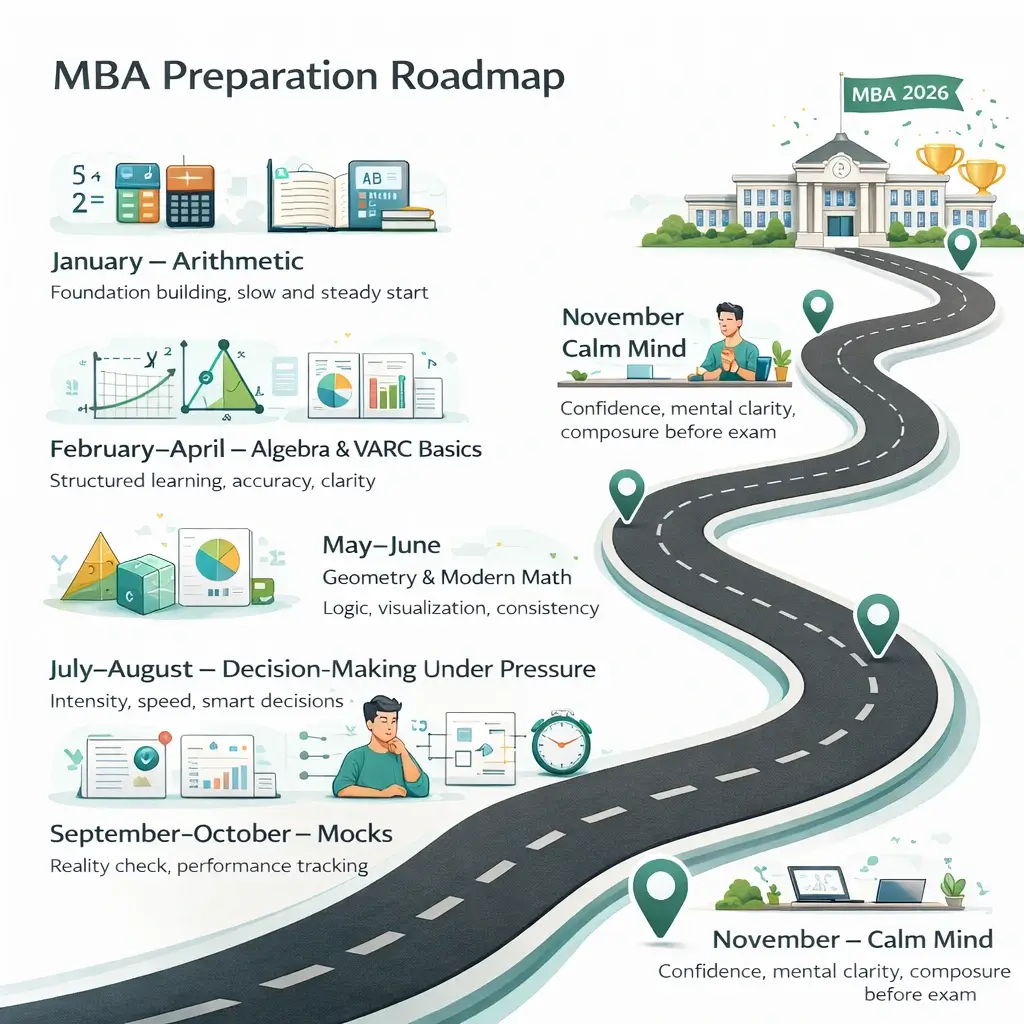
From February to April, focus on building strong foundations. Strengthen Arithmetic basics, start Algebra gradually, and introduce simple DILR sets. VARC should begin with daily reading and understanding language in context. Accuracy matters far more than speed in this phase.
May and June are about syllabus coverage and consolidation. Geometry and Modern Math should be completed with focus on concepts, not memorisation. Revise earlier topics, strengthen weak areas, practice tougher DILR sets, and maintain daily RC practice. By the end of June, no topic should feel unfamiliar.
July and August shift preparation into exam mode. Practice mixed, exam-level questions, attempt sectionals, and work on speed, selection, and decision-making. Learn which questions and DILR sets to attempt and which to leave.
September and October are dedicated to mocks and strategy. Take regular full-length mocks, analyse them deeply, and refine your personal exam strategy. Score fluctuations are normal.
November is about trust and execution. Revise lightly, review mistakes, rest well, and stay calm.
Remember: CAT is not about solving everything. It’s about solving the right questions correctly — accuracy first, speed next, strategy last. 💪
34 Visualizaciones


