
Pesquisar
Conhece novas pessoas, cria novas ligações e faz novos amigos

-
-
-
-
-
-
-
-
-
When exploring high-end cosmetic smile designs, the phrase "no-prep veneers" (frequently represented by the proprietary brand Lumineers) surfaces as an incredibly attractive alternative to traditional porcelain work. The promise of a flawless, permanent smile transformation without the use of local anesthesia injections, extensive dental drilling, or irreversible enamel reduction is a powerful marketing tool.
https://www.tidental.com.my/composite/porcelain/teeth-veneer-cost/
However, from a clinical and biomimetic standpoint, choosing between a traditional prep veneer and a no-prep Lumineer is not a simple matter of choosing "more comfort." It is a fundamental choice dictated by your existing tooth structure, your bite mechanics, and biological boundaries.
Let's dissect the differences in clinical approach, cost structures, and structural candidacy requirements between these two cosmetic modalities.
1. Clinical & Structural Discrepancies
The core differentiator between these two systems lies in the thickness of the ceramic material and the corresponding alteration—or preservation—of your natural tooth structure.
[Traditional Porcelain] ──> 0.5mm - 1.0mm Prep ──> Flush fit, deep color control, permanent
[No-Prep Lumineers] ──> 0.2mm - 0.3mm (No Prep) ──> Adds volume on top, reversible, translucent
Traditional Porcelain Veneers
The Preparation Process: To place a traditional porcelain veneer, a cosmetic dentist must micro-reduce the facial surface of the tooth, removing approximately 0.5 mm to 1.0 mm of natural enamel.
The Clinical Goal: This reduction is structurally necessary to create an anatomical "seat" for the new porcelain shell. It ensures that once the veneer is permanently bonded, the final tooth structure sits perfectly flush with your natural gum line and does not alter the spatial profile of your bite.
Irreversibility: Because human enamel cannot regenerate once removed, traditional veneers are a permanent lifelong commitment. If a veneer fractures years down the line, the tooth must be recovered with a new restoration.
No-Prep Lumineers
The Proprietary Material: Lumineers are a specific brand of ultra-thin veneers manufactured exclusively from a patented leucite-reinforced pressable ceramic called Cerinate porcelain.
The Contact-Lens Concept: Because Cerinate porcelain is exceptionally strong even at minimal thicknesses, Lumineers can be fabricated to a depth of just 0.2 mm to 0.3 mm—roughly the thickness of a contact lens.
The Preservation Edge: Because they are so thin, the dentist can bond them directly over your existing teeth without shaving away the natural enamel matrix. This means the process is frequently reversible; if the Lumineers are professionally removed in the future, the underlying natural teeth remain intact. Furthermore, because no dentin or deep enamel is exposed during the procedure, the need for temporary acrylic veneers or local anesthetic injections is completely eliminated.
2. Hard Candidacy Requirements: Evaluating the Foundation
The biggest trap in cosmetic dentistry is attempting to place a no-prep Lumineer on a patient who structurally requires a traditional prep design. Because no-prep veneers add material directly on top of the existing tooth structure, they add physical volume to your smile. If placed on the wrong candidate, the result will look thick, unnaturally bulky, and create a prominent ridge at the gumline that traps harmful bacteria.
Who is a Candidate for No-Prep Lumineers?
No-prep designs require a specific physical foundation to look natural:
Microdontia (Naturally Small Teeth): Teeth that are naturally undersized or short leave ample physical room for the added 0.2 mm layer of porcelain without looking over-bulky.
Lingually Positioned Teeth: Teeth that naturally tilt slightly backward toward the tongue can easily accept a no-prep veneer, which helps bring them forward into a uniform arch line.
Diastemas (Spacing Gaps): If you are looking to close distinct spaces between teeth, a no-prep approach can fill the gaps smoothly without changing the thickness of the facial walls.
Mild Discoloration: Ideal for teeth that require general brightening but do not possess severe deep stains.
Who Must Choose Traditional Veneers?
Traditional preparation is clinically mandatory if you present with any of the following parameters:
The True Cost Analysis
While the per-tooth hardware costs are relatively similar, the total clinical investment can shift based on step-by-step procedure needs:
Evaluate the Color Goals: If your primary objective is masking dark, dead dental nerves or metal fillings, opt for a prepared traditional design that gives the technician the spatial depth required to paint an opaque, lifelike canvas.
https://www.tidental.com.my/composite/porcelain/teeth-veneer-cost/422 Visualizações -
RedHat Linux Training UK for Advanced IT Career Skills
Visit us now : https://hiringgo.com/services/recruitment-agency-in-pune
RedHat Linux Training UK is an ideal program for students, IT professionals, system administrators, and network engineers who want to develop strong Linux administration skills. Linux is one of the most widely used operating systems in enterprise environments, cloud computing platforms, web servers, and data centers. As organizations continue to rely on Linux-based infrastructure, the demand for skilled Linux professionals remains high across various industries.
RedHat Linux Training UK covers essential topics such as Linux installation, system administration, user and group management, file systems, networking, security, shell scripting, and server configuration. The training is designed to provide both theoretical knowledge and practical experience, helping learners understand how Linux systems operate in real-world business environments.
One of the major benefits of RedHat Linux Training UK is hands-on learning. Most training programs include practical lab sessions, live projects, and real-time exercises that allow learners to work directly with Linux environments. This practical exposure helps students build confidence and improve their problem-solving abilities while preparing for professional roles.
RedHat Linux Training UK is suitable for beginners as well as experienced IT professionals who want to enhance their technical expertise. Many training providers also offer preparation for globally recognized certifications such as RHCSA (Red Hat Certified System Administrator) and RHCE (Red Hat Certified Engineer), which can significantly improve career prospects.
Another important advantage of RedHat Linux Training UK is strong career growth. Linux professionals are highly sought after in fields such as cloud computing, DevOps, cybersecurity, networking, and enterprise IT management. Certified Linux administrators often enjoy competitive salary packages and excellent long-term career opportunities.
In today’s technology-driven world, RedHat Linux Training UK provides the perfect combination of technical knowledge, practical training, and certification preparation. It helps learners stay competitive in the IT industry and opens doors to rewarding careers in Linux administration, cloud technologies, and enterprise infrastructure management.372 Visualizações -
Functional Food Encapsulation Market: Global Size, Application Share, and Value Trends Through 2034
The Food Encapsulation Market size is expected to reach US$ 14.99 Billion by 2034 from US$ 7.81 Billion in 2025. The market is estimated to record a CAGR of 7.51% from 2026 to 2034. The Food Encapsulation Market Report is segmented by shell material into Polysaccharides, Emulsifiers, Lipids, and Proteins. The method segment includes Physical, Chemical, and Physico-chemical. The technology segment includes Microencapsulation, Nanoencapsulation, and Hybrid Encapsulation.
Read More:https://www.theinsightpartners.com/reports/food-encapsulation-market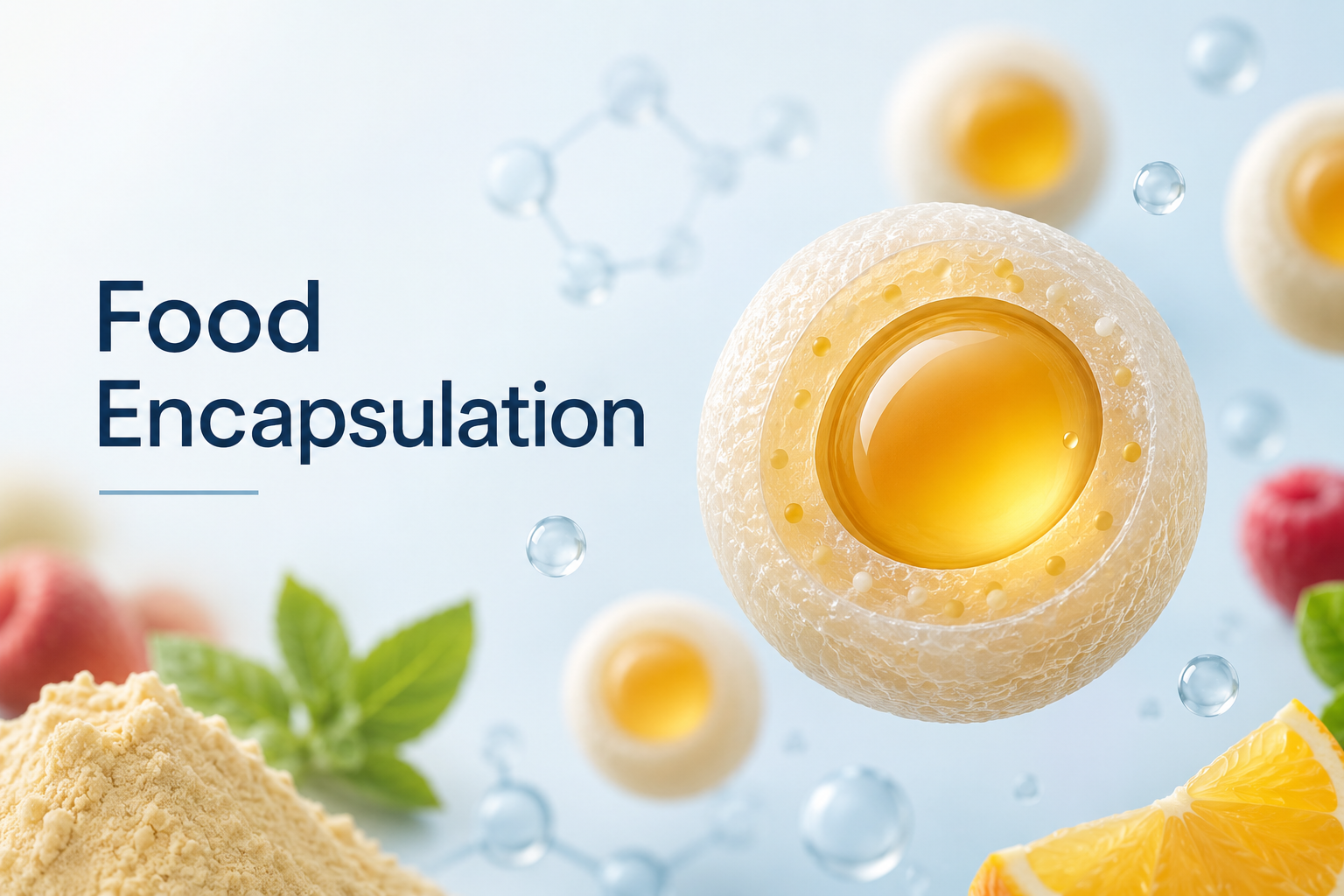 315 Visualizações

© 2026 flexartsocial.com


