

Optical Transceiver Market Growth to US$ 36.73 Billion by 2031: Trends and Forecast Insights
Optical transceivers are vital components of modern communication networks. They convert electrical signals into optical signals and vice versa, enabling high-speed, long-distance, and low-latency data transmission. These devices are widely used in data centers, telecommunications, enterprise networks, and cloud computing, providing the backbone for digital connectivity and next-generation network infrastructure.
Optical Transceiver Market Overview
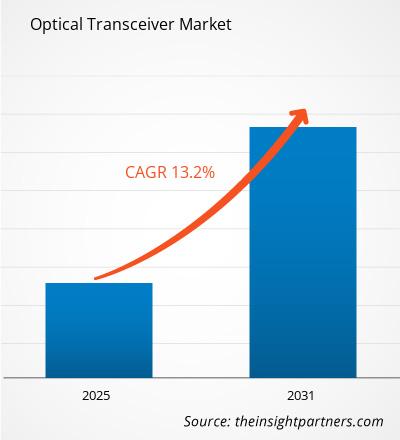
The Optical Transceiver Market was valued at US$ 14.60 billion in 2024 and is expected to reach US$ 36.73 billion by 2031, registering a CAGR of 14.2% from 2025 to 2031. Market growth is driven by technological innovations, expanding cloud adoption, rising data traffic, and the global rollout of 5G networks.
Optical transceivers facilitate efficient communication by enabling high-speed data transfer with minimal signal loss and interference. Their key benefits include:
High bandwidth capabilities
Low latency for real-time data transfer
Energy efficiency and reduced operational costs
Scalability for growing network demands
Common types of optical transceivers include:
SFP Series (Small Form-factor Pluggable): SFP, SFP+, SFP28, DSFP
QSFP Series (Quad Small Form-factor Pluggable): QSFP, QSFP+, QSFP28, QSFP56, QSFP-DD
CFP Series (C Form-factor Pluggable): CFP, CFP2, CFP4
Others: X2, XENPAK, XFP, CXP
These transceivers support data rates ranging from 1 Gbps to 800 Gbps, addressing various networking requirements.
Get More Information :- https://www.theinsightpartners.com/reports/optical-transceiver-market
#OpticalTransceiver #FiberOptics #NetworkingDevice #TelecomEquipment #DataCommunication #HighSpeedConnectivity #SFPModule #OpticalNetworking #NetworkHardware #ITInfrastructure #FiberNetwork #TransceiverModule
145 Visualizzazioni


