
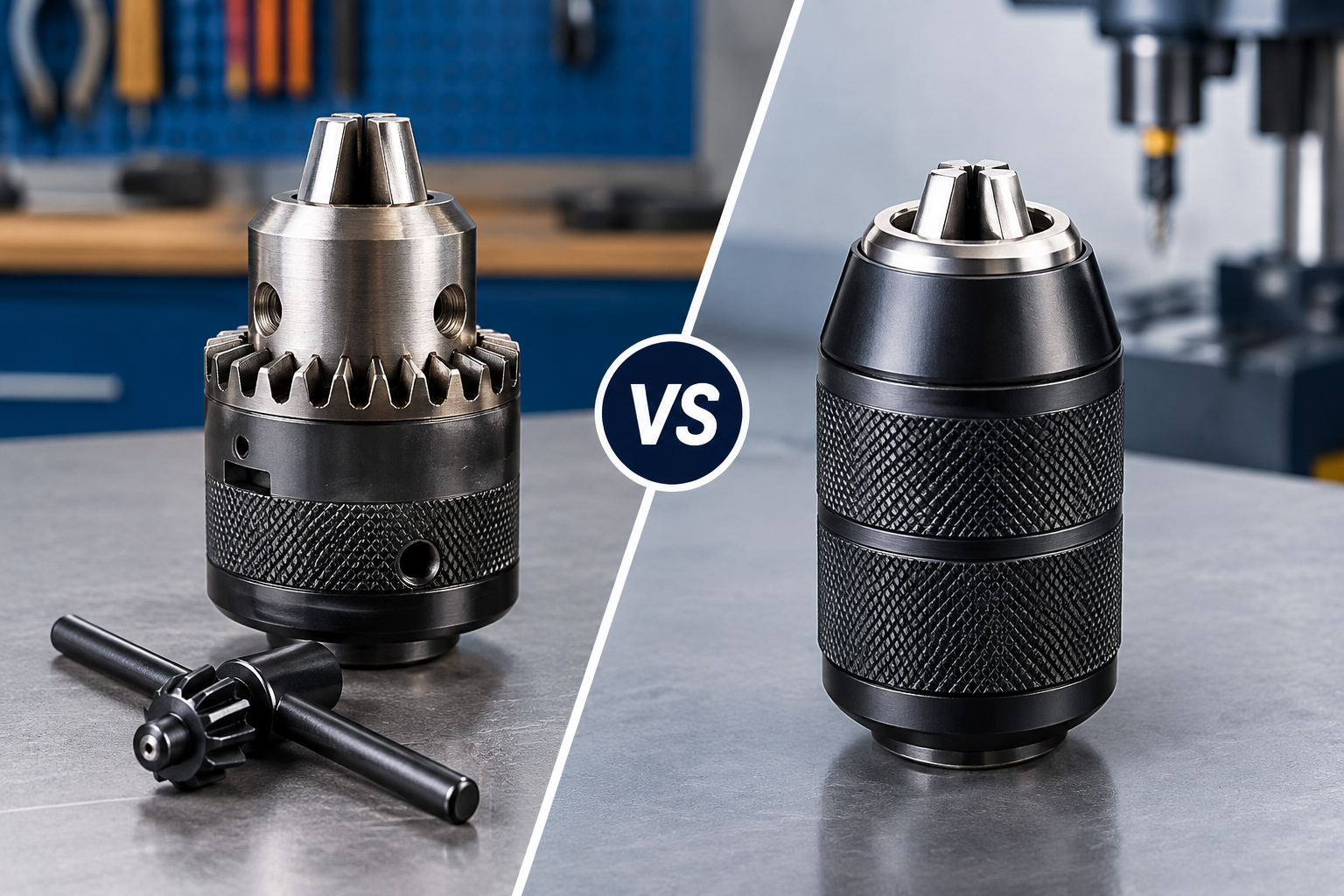
Key Differences Between Keyed and Keyless Drill Chucks: Which One Is Better?

Choosing the right drill chuck is important for achieving secure drill-bit holding, accurate drilling, and efficient workshop operations. Two common options are keyed and keyless drill chucks. Although both perform the same basic function, they differ in how they tighten, release, and hold drill bits.
Understanding these differences can help you select a chuck that suits your drilling machine, materials, and working conditions. Whether you operate a small workshop or an industrial facility, choosing the correct equipment can improve productivity. Khokhawala Trading LLC supports industrial buyers exploring machining accessories, including those looking to buy drill chuck and arbor Dubai.
Table of Contents
-
What Is a Keyed Drill Chuck?
-
What Is a Keyless Drill Chuck?
-
Key Differences Between Keyed and Keyless Drill Chucks
-
Advantages and Limitations
-
How to Choose the Right Drill Chuck
-
Common Buying Mistakes
-
FAQs
-
Conclusion and CTA
1. What Is a Keyed Drill Chuck?
A keyed drill chuck uses a separate chuck key to tighten or loosen its jaws. The key engages with the chuck mechanism, allowing the operator to secure the drill bit.
This design is commonly used in workshops and industrial drilling applications where controlled tightening is important.
Main features:
-
Uses a separate key for tightening.
-
Provides controlled jaw adjustment.
-
Suitable for various general drilling applications.
-
Requires the correct chuck key for operation.
2. What Is a Keyless Drill Chuck?
A keyless drill chuck allows the operator to tighten and release drill bits manually without using a separate key. Its sleeve is rotated by hand to grip or release the drill bit.
Keyless chucks are useful in applications where drill bits need to be changed frequently.
Main features:
-
No separate chuck key is required.
-
Allows convenient drill-bit changes.
-
Reduces the chance of misplacing a chuck key.
-
Available in different capacities and designs.
3. Key Differences Between Keyed and Keyless Drill Chucks
Both types are designed to hold drill bits, but their operating methods and practical advantages differ.
| Feature | Keyed Drill Chuck | Keyless Drill Chuck |
|---|---|---|
| Tightening | Uses a chuck key | Manual tightening |
| Bit changes | Requires a separate key | Usually faster and more convenient |
| Operation | Key-operated | Hand-operated |
| Key requirement | Yes | No |
| Best suited for | Applications requiring controlled key tightening | Frequent drill-bit changes |
| Convenience | Requires keeping the key available | Easy access without a separate key |
The right choice depends on the drilling machine, application, and required gripping performance.
4. Advantages and Limitations
Keyed Drill Chuck
Advantages:
-
Allows controlled tightening through the chuck key.
-
Suitable for many workshop drilling applications.
-
Offers a familiar operating method for industrial users.
Limitations:
-
Requires a separate chuck key.
-
Bit changes may take longer.
-
The key can be misplaced if not stored properly.
Keyless Drill Chuck
Advantages:
-
Convenient for frequent bit changes.
-
Does not require a separate key.
-
Helps simplify routine workshop operations.
Limitations:
-
Tightening depends on the chuck design and manual operation.
-
Some applications may require a different gripping arrangement.
-
Not every keyless chuck is suitable for every machine or drilling condition.
5. How to Choose the Right Drill Chuck
Before purchasing, consider these important factors:
Chuck Capacity
Check the minimum and maximum drill-bit diameters supported by the chuck. Select a capacity that matches your regular drilling requirements.
Machine Compatibility
Verify the chuck mounting connection and ensure it matches the machine or selected arbor.
Drilling Application
Consider the materials being drilled, operating conditions, and frequency of drill-bit changes.
Accuracy and Runout
For precision drilling, review the manufacturer's runout specifications. Correct alignment helps support accurate hole production.
Build Quality
Inspect the jaws, sleeve, body, and operating mechanism. Choose a product suitable for the frequency and intensity of your work.
6. Common Buying Mistakes
Avoid these mistakes when selecting a drill chuck:
-
Choosing a chuck without checking its capacity.
-
Ignoring machine and arbor compatibility.
-
Assuming every keyless chuck is suitable for heavy-duty drilling.
-
Overlooking runout specifications.
-
Selecting a product based only on price.
Checking these details can help prevent compatibility issues and improve drilling performance.
7. FAQs
1. What is the main difference between keyed and keyless drill chucks?
A keyed chuck uses a separate key for tightening, while a keyless chuck is tightened manually.
2. Which drill chuck is easier to use?
A keyless chuck is generally more convenient because it does not require a separate key.
3. Is a keyed drill chuck suitable for industrial use?
Yes. Keyed chucks are used in many workshop and industrial drilling applications, depending on their specifications.
4. Can a keyless drill chuck hold different drill-bit sizes?
Yes, provided the drill-bit diameter falls within the chuck's specified capacity.
5. Does a drill chuck need a compatible arbor?
Yes. The chuck and arbor must have matching mounting connections, and the arbor must fit the machine spindle.
6. Where can I buy drill chuck and arbor Dubai?
Contact Khokhawala Trading LLC to discuss your machine requirements and check suitable drill chuck and arbor options.
8. Conclusion and CTA
Keyed and keyless drill chucks both provide reliable drill-bit holding when selected and used correctly. A keyed chuck offers key-operated tightening, while a keyless chuck provides convenience for frequent tool changes. Your final choice should depend on machine compatibility, chuck capacity, drilling requirements, and operating preferences.
For industrial machining accessories and product guidance, contact Khokhawala Trading LLC. Whether you want to buy drill chuck and arbor Dubai or explore a vertex rotary table for sale UAE, choosing equipment that matches your workshop requirements can support accurate and efficient machining.


