
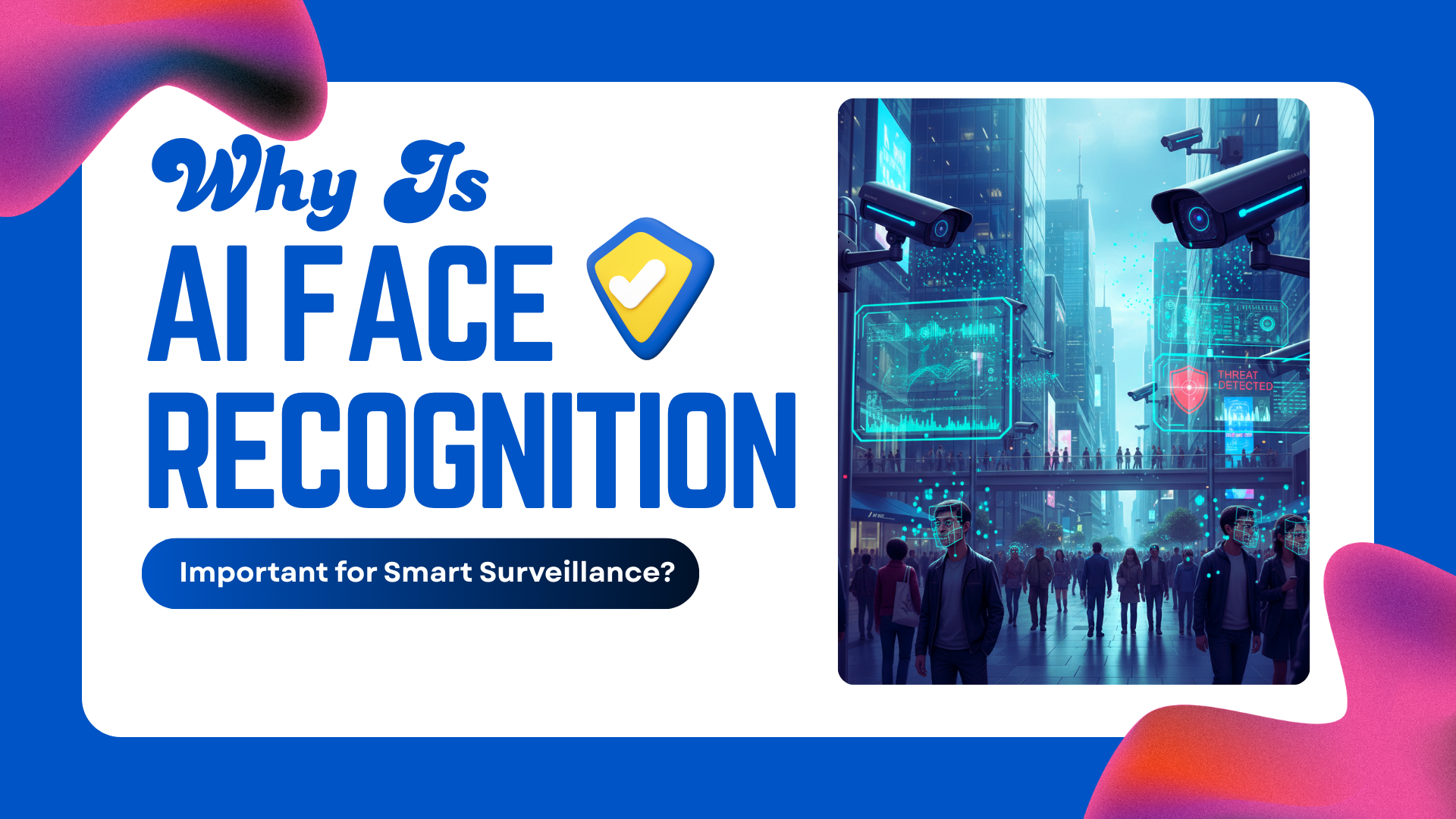
Why Is AI Face Recognition Important for Smart Surveillance?

In a world where security threats are faster, smarter, and more unpredictable, simply recording video is no longer enough. Organizations and cities now need systems that can understand what they see, respond in real time, and reduce human dependency. This is where AI face recognition becomes essential for smart surveillance. In simple terms, it helps identify, verify, and track individuals automatically, enabling quicker decisions, improved safety, and proactive threat prevention from the very first moment of detection.
What Makes Smart Surveillance Truly “Smart”?
Smart surveillance goes beyond watching; it analyzes, learns, and acts.
Traditional CCTV systems rely heavily on human monitoring, which leads to fatigue, delays, and missed events. Smart surveillance systems use advanced analytics to convert live video into actionable insights.
Key characteristics include:
- Real-time identity verification
- Automated alerts and responses
- Reduced false alarms
- Scalable monitoring across locations
Facial recognition acts as the intelligence layer that transforms video footage into meaningful security intelligence.
How Facial Recognition Enhances Surveillance Accuracy
Identifying Individuals Instantly - Facial recognition technology maps unique facial features and compares them against authorized or watchlist databases. This allows systems to:
- Detect unauthorized access attempts
- Recognize repeat offenders
- Verify employees or residents automatically
Unlike access cards or passwords, faces cannot be lost, stolen, or shared.
Reducing Human Error - Manual monitoring is prone to oversight, especially across multiple screens. Automated recognition ensures:
- Continuous vigilance
- Consistent decision making
- Faster incident response
This dramatically improves accuracy in high-risk environments like airports, campuses, and public spaces.
Proactive Threat Detection Instead of Reactive Response

Facial recognition enables early threat detection by identifying persons of interest before incidents occur.
By comparing faces against predefined risk databases, surveillance systems can trigger alerts before a situation escalates. This shift from reaction to prevention is critical for:
- Crowd control
- Border security
- Retail theft prevention
It allows security teams to intervene discreetly and efficiently.
Seamless Integration with Intelligent Camera Systems
Modern surveillance infrastructures rely on high-resolution sensors combined with intelligent analytics. When paired with an AI security camera, facial recognition adds context to visual data, enabling smarter decisions rather than raw recordings.
This integration helps:
- Track movement patterns across zones
- Improve low-light and angle detection
- Enhance recognition accuracy over time
As a result, surveillance becomes adaptive rather than static.
Scalability Across Smart Cities and Enterprises
Managing Large-Scale Surveillance Networks - Smart cities deploy thousands of cameras across transportation hubs, streets, and public buildings. Facial recognition allows:
- Centralized monitoring
- Cross-location identity tracking
- Automated compliance reporting
Without intelligent recognition, such a scale would be impossible to manage effectively.
Supporting Business Security and Operations - Enterprises use facial recognition not only for security but also for:
- Attendance tracking
- Customer behavior analysis
- Restricted area access
This dual use adds operational value beyond safety alone.
Privacy, Compliance, and Ethical Use - A common concern is privacy. Smart surveillance systems address this through:
- Data encryption
- Consent-based identification
- Configurable retention policies
When implemented responsibly, facial recognition can balance safety with individual rights. Transparency and compliance with local regulations are key to ethical deployment.
The Role of Advanced Video Analytics Platforms

Facial recognition does not operate in isolation. It works best when powered by robust video intelligence software that interprets patterns, behaviors, and anomalies across footage.
Such platforms enable:
- Behavioral analysis alongside identity recognition
- Smarter alert prioritization
- Long-term trend insights
This combination elevates surveillance from observation to intelligence-driven security.
Why Facial Recognition Is a Future-Proof Investment
Long-term Benefits Include:
- Reduced security costs through automation
- Faster emergency response times
- Improved public trust through safer environments
As threats evolve, surveillance systems must evolve too. Facial recognition ensures adaptability in an increasingly complex security landscape.
Summary
Facial recognition is important because it transforms surveillance from passive monitoring into proactive protection. Used responsibly, AI facial recognition improves accuracy, reduces human error, enables early threat detection, and scales effortlessly across cities and enterprises. It is no longer a luxury feature but a foundational element of modern intelligent security systems.
FAQs: Common Questions Users Ask
Q1. Is facial recognition more effective than traditional CCTV?
Yes. It analyzes identities and behaviors automatically instead of just recording footage.
Q2. Can facial recognition work in real time?
Modern systems are designed for instant identification and alert generation.
Q3. Is facial recognition safe for privacy?
When deployed with consent, encryption, and compliance controls, it can be both secure and ethical.
Q4. Where is facial recognition most commonly used?
Smart cities, airports, corporate offices, retail spaces, and high security facilities.