
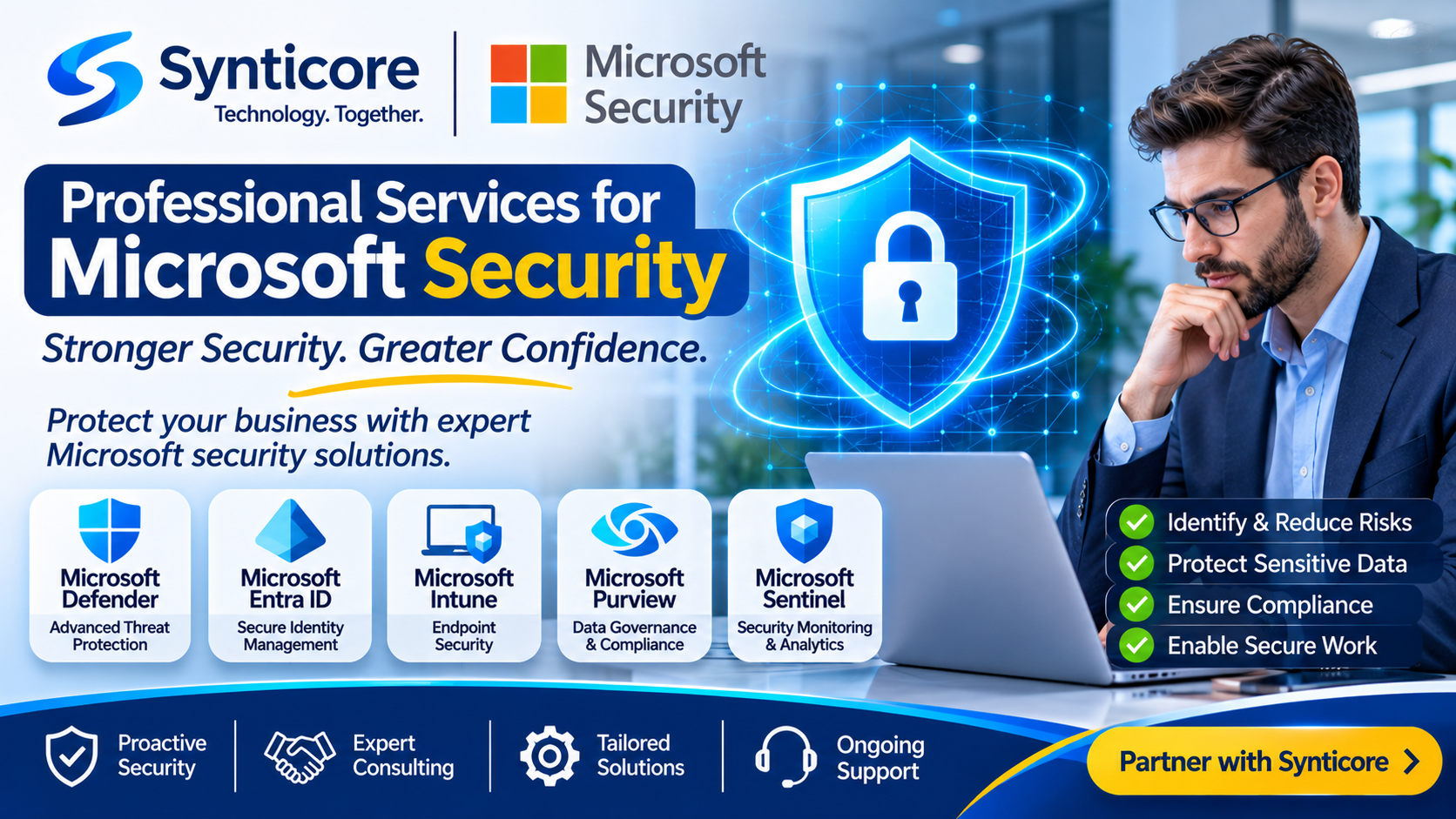
Professional Services for Microsoft Security: Protecting Modern Business Environments

As businesses become increasingly dependent on cloud platforms, digital collaboration, and connected applications, protecting company information has become a major priority. Cybersecurity threats continue to evolve, making it important for organizations to develop reliable security strategies that protect their systems, employees, and sensitive data.
Microsoft provides a range of security technologies designed to help organizations manage risks across their digital environments. However, selecting and configuring the right tools requires technical knowledge and a clear understanding of business requirements.
Professional Microsoft security services can help organizations strengthen their protection strategies, improve security management, and build a more resilient IT environment.
Understanding Microsoft Security Solutions
Microsoft offers a broad collection of security technologies that help businesses protect identities, devices, applications, and information.
Some important solutions include:
-
Microsoft Defender: Provides security capabilities for identifying and responding to different cyber threats.
-
Microsoft Entra ID: Helps organizations manage identities, authentication, and access to resources.
-
Microsoft Intune: Supports device management and endpoint security policies.
-
Microsoft Purview: Provides information protection, data governance, and compliance capabilities.
-
Microsoft Sentinel: Offers cloud-based security information and event management capabilities.
These technologies can work together to support an organization's broader cybersecurity strategy, depending on its licensing, configuration, and operational needs.
Why Businesses Need Professional Microsoft Security Services
Managing cybersecurity is not simply about installing security software. Organizations must understand their risks, establish appropriate access policies, monitor suspicious activity, and regularly review their security configurations.
Professional services for Microsoft security can help businesses address these responsibilities through structured planning and technical implementation.
A well-designed security strategy can help organizations:
-
Protect sensitive business information.
-
Improve identity and access management.
-
Strengthen endpoint protection.
-
Identify suspicious activities more effectively.
-
Support regulatory and compliance requirements.
-
Reduce security gaps across business systems.
The right approach depends on an organization's size, infrastructure, industry, and security priorities.
How Professional Services for Microsoft Security Help Organizations
Businesses looking to improve their cybersecurity capabilities may benefit from working with specialists who understand Microsoft's security ecosystem.
Professional services for Microsoft security can provide guidance on selecting, configuring, and managing suitable security technologies according to organizational requirements.
Common areas of support include:
Identity and Access Management
Identity security helps ensure that employees and authorized users can access only the resources they need. Microsoft Entra ID provides capabilities such as multifactor authentication, conditional access, and identity management.
Microsoft Defender Configuration
Microsoft Defender technologies can support endpoint protection, threat detection, and security response. Proper configuration helps organizations establish policies that align with their security requirements.
Endpoint and Device Management
Organizations need to manage laptops, mobile devices, and other endpoints that connect to business resources. Microsoft Intune can help administrators configure device policies, manage access, and maintain security standards.
Data Protection and Compliance
Sensitive information requires appropriate handling and protection. Microsoft Purview provides capabilities for data classification, information protection, retention, and compliance management.
Security Monitoring and Threat Detection
Continuous monitoring can help organizations identify unusual activities and investigate potential security incidents. Microsoft Sentinel provides analytics and security monitoring capabilities that can support these processes.
The Importance of a Zero Trust Security Strategy
Traditional security approaches often relied heavily on protecting the network perimeter. Modern businesses, however, operate across cloud platforms, remote environments, and multiple devices.
Zero Trust is a security approach based on the principle of verifying every access request rather than automatically trusting users or devices.
Important Zero Trust principles include:
-
Verify identities before granting access.
-
Apply least-privilege permissions.
-
Evaluate device security and compliance.
-
Monitor activities across the environment.
-
Review access policies regularly.
Microsoft security technologies can support organizations implementing these principles across their IT infrastructure.
Common Microsoft Security Challenges for Businesses
Even organizations with modern security tools can experience challenges when managing complex IT environments.
One common issue is incorrect configuration. Security products may not deliver their intended value when policies, permissions, and monitoring settings are not properly established.
Another challenge is managing multiple security tools. Without a coordinated approach, administrators may struggle to maintain visibility across different systems.
Employee awareness is also important. Phishing attempts, weak passwords, and unsafe data-sharing practices can create security risks.
Regular security reviews, employee training, appropriate configurations, and ongoing monitoring can help businesses address these challenges.
Choosing the Right Microsoft Security Partner
Selecting a suitable Microsoft technology partner is an important step for organizations planning to improve their cybersecurity.
Businesses should consider technical expertise, experience with Microsoft security products, understanding of compliance requirements, and the ability to provide practical implementation guidance.
A reliable partner should begin by assessing the organization's current environment and identifying areas that need improvement. Recommendations should be based on actual business requirements rather than unnecessary technology upgrades.
Organizations should also consider whether ongoing support, security reviews, and employee guidance are available.
Conclusion
Cybersecurity is an ongoing responsibility for modern organizations. As businesses adopt cloud services, remote collaboration, and connected applications, protecting identities, devices, and sensitive information becomes increasingly important.
Microsoft provides several technologies that can support these security requirements. With proper planning, configuration, and management, organizations can build a more coordinated approach to cybersecurity.
Working with knowledgeable Microsoft security professionals can help businesses understand their risks, strengthen their security environment, and prepare for changing digital threats. Read more blog