
Buscar
Descubre gente nueva, crea nuevas conexiones y haz nuevos amigos

-
-
-
-
-
-
Steel Wire Market by 2031: Market Analysis, Key Drivers, and Industry Outlook
The global steel wire is witnessing consistent growth due to rising infrastructure development, increasing automotive production, and expanding industrial applications worldwide. Steel wire is widely used in construction reinforcement, automotive components, power transmission systems, and agricultural equipment because of its superior strength, durability, and corrosion resistance.
Get More Information :- https://www.theinsightpartners.com/reports/steel-wire-market
Market Analysis and Overview
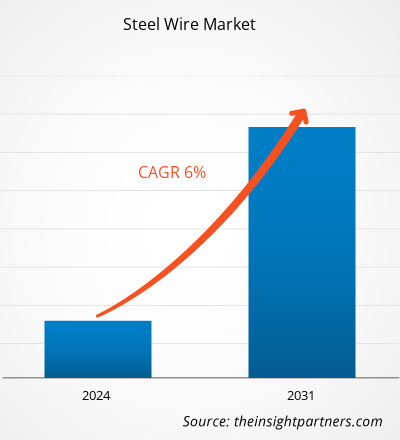
The steel wire market size is projected to reach US$ 123.23 billion by 2031 from US$ 77.47 billion in 2023. The market is expected to register a CAGR of 6.0% during 2023–2031. Enormous developments in the construction industry due to population outburst and electrification of automobiles are the current transformative trends in the steel wire market.
Steel wire plays a vital role in various industries, including construction, automotive, mining, marine, and agriculture. It is widely used in the production of springs, cables, tire reinforcements, wire ropes, fasteners, and fencing systems. As industrialization accelerates globally, manufacturers are increasingly adopting advanced steel processing technologies to enhance product performance and efficiency.
A detailed assessment of the Steel Wire Market Outlook highlights strong demand from infrastructure development projects and industrial manufacturing activities. The construction industry, in particular, relies heavily on steel wire products for reinforced concrete structures, suspension cables, and structural support systems.
Market Report Drivers
Expansion of the Global Construction Industry
One of the primary drivers of the steel wire market is the rapid expansion of the global construction sector. Steel wire is extensively used in reinforced concrete structures, bridge cables, fencing systems, and building frameworks. The rising demand for residential and commercial infrastructure is significantly boosting the consumption of steel wire products.
Governments in emerging economies are investing heavily in large-scale infrastructure projects, including highways, railways, airports, and energy facilities. These developments require durable and high-strength materials, which is increasing the demand for steel wire.
Increasing Automotive Production
The automotive industry is another key consumer of steel wire. Steel wires are used in tire reinforcement, suspension springs, braking systems, and seat structures. With the global automotive sector experiencing steady growth, the demand for steel wire components continues to rise.
In addition, the growing adoption of electric vehicles is further accelerating the need for advanced wiring systems and high-performance steel materials. Electric vehicles require durable wiring components for efficient energy transmission and battery management systems.
Rising Energy and Power Infrastructure
The expansion of energy infrastructure is creating significant growth opportunities for the steel wire market. Steel wires are commonly used in overhead power transmission lines, energy cables, and reinforcement systems for renewable energy installations.
The increasing investment in renewable energy projects such as wind and solar farms is contributing to the rising demand for strong and corrosion-resistant steel wire products. As countries focus on strengthening power distribution networks, steel wire consumption in the energy sector is expected to increase.
Industrial Manufacturing Growth
Steel wire is a crucial raw material in numerous manufacturing processes. It is widely used in machinery production, welding electrodes, mechanical springs, and industrial fasteners. The continued growth of the global manufacturing sector, particularly in Asia-Pacific economies, is driving the demand for steel wire.
Key Players in the Global Steel Wire Market
• ArcelorMittal
• Bridon-Bekaert Ropes Group
• JFE Steel Corporation
• Nippon Steel Corporation
• Kobe Steel Ltd.
• WireCo WorldGroup
• HBIS Group
• Optimus Steel
• Insteel Industries
• The HEICO Companies432 Visualizaciones -
Water Storage Tank Market Forecast 2031: Growth, Trends & Future Outlook
Get More Information: - https://www.theinsightpartners.com/reports/water-storage-tank-market
Water storage tanks are specialized infrastructure components designed to capture and hold water for various essential purposes. From providing potable drinking water and supporting agricultural irrigation to serving as reservoirs for industrial processes and fire protection, these systems are vital for maintaining a consistent water supply. As global populations rise and water stress increases, these tanks have transitioned from basic storage units into sophisticated systems capable of managing water quality and distribution efficiency through advanced engineering.
Understanding the Water Storage Tank Market
The global market is poised for steady expansion as industries and municipalities look to modernize their liquid containment strategies. According to current research, the Water Storage Tank Market size is expected to reach US$ 6.5 Billion by 2031. The market is anticipated to register a CAGR of 3.5% during the forecast period of 2025 to 2031.
The market for water storage solutions is currently undergoing a significant transformation. Modern storage tanks are no longer just static containers; they are integral parts of a smart water grid. By utilizing a variety of materials such as steel, fiberglass, concrete, and high performance polymers, manufacturers are able to cater to specific environmental and chemical requirements.
Water Storage Tank Market Analysis and Segmentation
To gain a clear perspective on the industry, it is helpful to look at the market through its primary segments. These classifications help stakeholders identify specific areas of demand and technological application.
• Material Segments: The industry relies heavily on fiberglass, steel, concrete, and polymers. Steel tanks are often preferred for their structural strength in industrial settings, while polymer and fiberglass options are favored for their light weight and immunity to corrosion.
• Capacity and Size: Tanks are categorized into four main volume brackets: less than 5,000 liters, 5,001 to 50,000 liters, 50,001 to 250,000 liters, and massive reservoirs above 250,000 liters.
• Type of Installation: The market is divided into aboveground and underground systems. Underground tanks are increasingly popular in space constrained urban environments, whereas aboveground tanks offer ease of maintenance.
• Industry End Users: The primary sectors driving demand include municipal authorities for public water supply, industrial plants for processing, commercial complexes for fire safety, and residential properties for domestic storage.396 Visualizaciones -
-
-
-

© 2026 flexartsocial.com


